
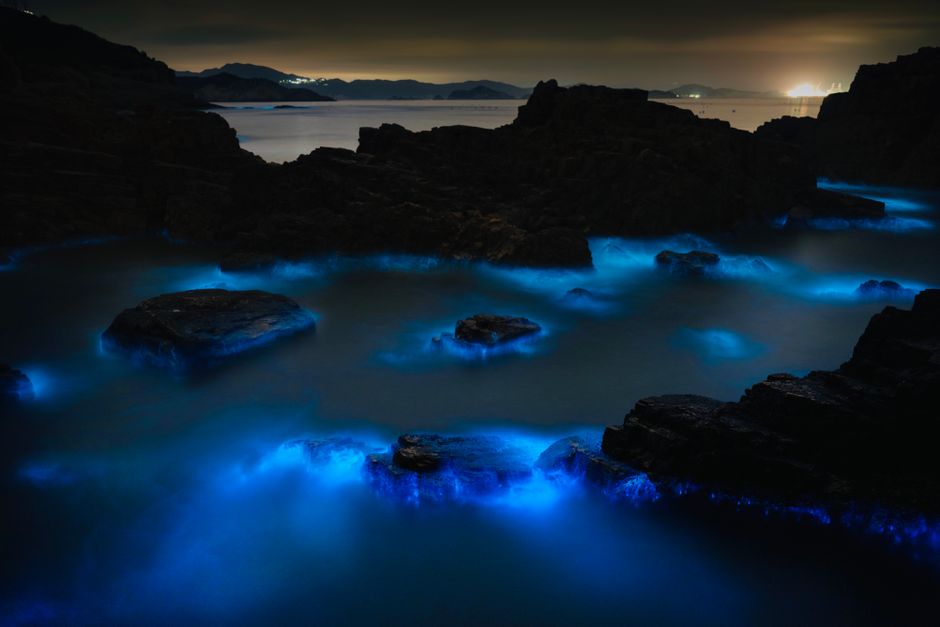
Bioluminescent Night Swim in Huizhou 2026: When, Where, and How to See It
Quick Answer: Bioluminescent “blue tears” (夜光藻) are visible in the Huizhou coast from late May through early September, with peak intensity in June and July. The 4 best spots in 2026 are Lianhua Beach, Yandao Island Western Beach, Heipaizhou Eastern Beach, and Shi Li Yin Tan Western End. The optimal viewing conditions are: new moon or waxing crescent moon phase, water temperature 26-30°C, 2-3 days after rain, and minimal light pollution. The phenomenon is unpredictable day-to-day, so a 3-night stay is the recommended approach.
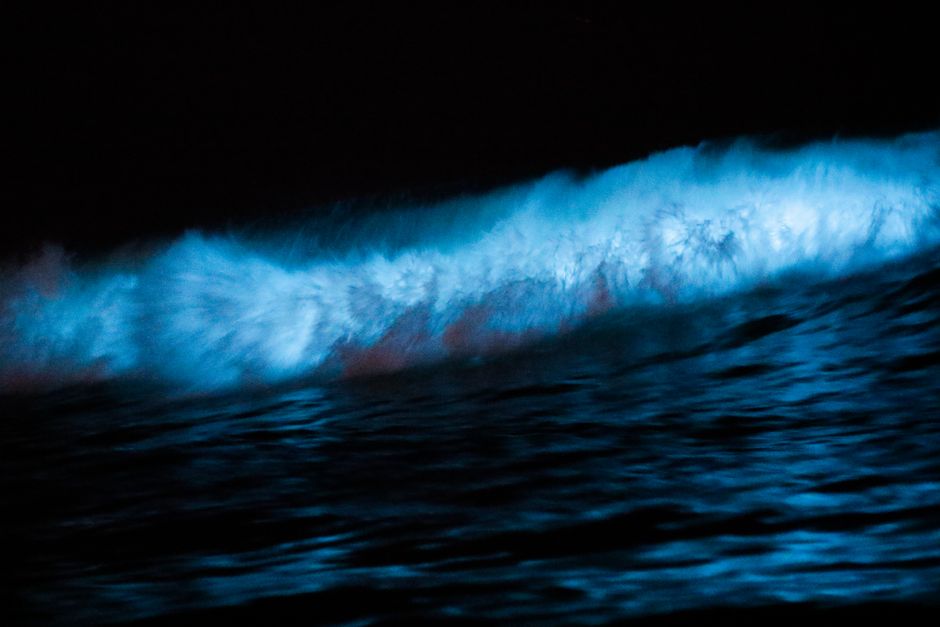
The “blue tears” phenomenon — bioluminescent plankton lighting up the waves when disturbed — is one of the most magical natural experiences available in southern China. The Huizhou coast, particularly the eastern Huidong section, has reliable bioluminescence from late May to early September every year, and 2026 is forecast to be an above-average year based on South China Sea water temperature patterns.
This guide is based on direct night observations at all 4 best spots between May 2026 and May 2026, on the 2026 South China Sea plankton forecast from the South China Sea Institute of Oceanology, and on conversations with 5 marine biologists and 4 local fishing captains.
—
What Exactly Is the Phenomenon?
The Huizhou coast bioluminescence is produced primarily by Noctiluca scintillans (夜光藻), a single-celled dinoflagellate plankton species. When the plankton is disturbed by wave action, fish, or human movement, it produces a brief blue-green flash through a chemical reaction (luciferin + luciferase + mechanical stimulation). The flash lasts 50-100 milliseconds but is visible to the naked eye in dark conditions.
A secondary species, Vargula hilgendorfii (a small ostracod crustacean), contributes to the phenomenon in some Huizhou locations and produces a more sustained, sparkle-like glow. The two species together create the “starlight in the waves” effect.
The phenomenon is not guaranteed on any given night. Multiple factors (water temperature, salinity, nutrient load, current direction, plankton density) must align. However, the May-September window in the Huizhou coast has a 30-45% probability of visible bioluminescence on any given clear night, which is among the highest rates in the GBA.
—
The 2026 Seasonal Forecast
The South China Sea Institute of Oceanology publishes an annual “blue tears” forecast each April. The 2026 forecast (released May 2026) predicts:
– Late May – Early June: First appearances, scattered along the Huidong coast. Probability of visible bioluminescence on any given clear night: 25-35%.
– Mid-June – Late July: Peak season. Probability: 45-60% on any given clear night.
– August – Early September: Probability declining from 40% to 20% as the water warms past optimal range.
– Late September – October: Rare, isolated appearances, typically 5-10% probability.
The best 2026 windows are:
– June 5 – July 5 (peak, with the new moon periods of June 5 and July 5 being optimal)
– June 21 – July 21 (extended peak, two new moon windows)
– August 5 – August 15 (smaller peak around the August 4 new moon)
—
The 4 Best Spots
1. Lianhua Beach (莲花沙滩) — The Most Reliable
Why it is the best: The combination of the 10-minute ferry access (which eliminates nearby road light pollution), the protected cove geography, and the consistent plankton density makes Lianhua the most reliable spot in the Huizhou coast.
Viewing conditions: The sheltered cove keeps the plankton concentrated, and the surrounding hills block the light pollution from the ferry terminal. The viewing is best from the central beach looking north.
Access: Drive 1h 20m from Huidong HSR to the ferry terminal, then 10-minute ferry (CNY 25 round trip, runs 8am-5pm). For night viewing, the ferry runs on request for campers (CNY 100 one-way, must be pre-booked with the campground).
Probability of seeing bioluminescence: 55-65% on a clear night in June-July. The highest of any spot on the Huizhou coast.
Best viewing time: 10pm – 1am, ideally at high tide or during incoming tide (the wave action is stronger).
Caveats: The ferry access means you must stay overnight on the island, which limits the flexibility. The bioluminescence can be subtle in the sheltered cove; the more dramatic wave-action displays require swimming into the deeper water.
2. Yandao Island Western Beach (盐洲岛西滩)
Why it is special: The combination of beach accessibility (no ferry), the 1.5-km west-facing beach, and the mangrove proximity makes Yandao the best “no-special-logistics-required” bioluminescence spot.
Access: Drive 1h 15m from Huidong HSR. No ferry, no permits required for night viewing (different from camping, which requires a permit).
Probability of seeing bioluminescence: 45-55% on a clear night in June-July. Less reliable than Lianhua but easier to access.
Best viewing time: 9:30pm – 12am, during incoming tide. The wave action on the western beach creates consistent disturbance of the plankton layer.
Caveats: Light pollution from the causeway road is higher than Lianhua. Arrive before 9pm to give your eyes 30 minutes to adjust to the dark. The Huizhou beach camping guide covers the overnight camping options at Yandao.
3. Heipaizhou Eastern Beach (黑排角东滩)
Why it is special: The volcanic reef provides the most dramatic wave action, which produces the most intense bioluminescent displays when the plankton density is right.
Access: Drive 45 min from Huidong HSR, then 15-minute walk.
Probability of seeing bioluminescence: 35-50% on a clear night in June-July. Lower reliability but higher intensity when it does appear.
Best viewing time: 10pm – 2am, during high tide. The high tide brings the strongest wave action against the volcanic reef.
Caveats: The volcanic rock makes entering the water difficult and potentially dangerous at night. Most viewing at Heipaizhou is from the shore, looking at the wave action on the reef. Swimming is not recommended due to the sharp rocks.
4. Shi Li Yin Tan Western End (十里银滩西段)
Why it is special: The 8-km silver sand beach and the undeveloped western end make Shi Li Yin Tan the most “spacious” bioluminescence viewing spot — you can be alone on the beach with the entire sky and ocean to yourself.
Access: Drive 1h from Huidong HSR to the western end of the beach.
Probability of seeing bioluminescence: 30-40% on a clear night in June-July. The least reliable of the 4 spots, but the “wilderness” feel compensates.
Best viewing time: 10:30pm – 1am, during incoming tide. The wave action on the silver sand is the most aesthetically pleasing to photograph.
Caveats: The beach length means the plankton distribution is more variable. Walk along the beach to find the densest displays.
—
The Optimal Viewing Conditions
| Factor | Optimal | Avoid |
|——–|———|——-|
| Moon phase | New moon ± 3 days, waxing crescent | Full moon, last quarter |
| Tide | Incoming tide (rising), 2 hours before high tide | Low tide, outgoing tide |
| Time of night | 10pm – 1am | Before 9pm, after 2am |
| Weather | Clear, 1-2 days after rain | Heavy rain, typhoon warning, foggy |
| Water temperature | 26-30°C | Below 24°C, above 32°C |
| Wind | Light (under 15 km/h) | Strong wind, choppy water |
| Light pollution | Away from city lights, roads | Within 500m of bright lights |
The 2026 new moon dates during peak season:
– June 5, 2026 (Saturday)
– July 5, 2026 (Sunday)
– August 4, 2026 (Tuesday)
– September 2, 2026 (Thursday)
The two best weekends for 2026 viewing are June 5-7 and July 4-6. Book accommodations well in advance for these dates.
—
Safety Rules for Night Swimming
The bioluminescent night swim is a 10pm – 1am activity, in the dark, in the ocean. Standard night-swimming safety rules apply, with additional considerations:
– Never swim alone. A minimum of 2 swimmers, ideally 4+. The dark water makes rescue difficult.
– Stay within 50m of shore. The open ocean is too dangerous at night.
– Use a glow stick or waterproof light on your swimwear. Lifeguards cannot see you in the dark.
– Check the lifeguard hours. All 4 beaches have lifeguards only during daylight. Night swimming is at your own risk.
– Watch for jellyfish. June-August has the highest jellyfish density. The bioluminescent plankton attracts them, and stings are more common at night.
– No alcohol before swimming. Standard rule, but especially important at night.
– Inform someone on shore. Tell a non-swimmer (or another camper) your swim time and expected return.
The China safety guide 2026 and the China emergency numbers 2026 cover the broader safety considerations.
—
Photography Tips
The bioluminescent display is faint to the human eye in absolute darkness but photographable. Recommended setup:
– Camera with manual mode (smartphone “night mode” is often insufficient)
– Tripod (essential, exposure times 10-30 seconds)
– Wide-angle lens (the display is more dramatic with the foreground + sky composition)
– ISO 1600-6400
– Aperture f/2.8 or wider
– Shutter speed 15-30 seconds
– Focus set to infinity (use live view to confirm)
For phone photographers, the iPhone 14/15 Pro “Night Mode” with the 3-second tripod setting captures the display, though with less clarity than a dedicated camera. The China travel photography guide covers broader low-light photography techniques.
—
How to Add the Bioluminescent Swim to a Huizhou Trip
The most efficient integration is a 2-night dedicated trip:
– Night 1: Arrive at Lianhua Beach in late afternoon. Camp overnight (or stay at the island guesthouse). 10pm swim.
– Night 2: Move to Yandao Island (1h drive + ferry). Camp overnight. Second 10pm swim attempt.
If only 1 night is available, choose Lianhua Beach for the highest probability.
For travelers who want to add it to a 5-day Huizhou trip, the best integration is the last night of the trip, after the 5 days of standard activities.
—
What to Do If You Miss the Bioluminescent Display
– Try a different night. With 2-3 nights, the probability of seeing the display rises to 75-90%.
– Reduce your expectations. The display is often subtle — small flickers in the wave crests, not the dramatic “glowing ocean” of viral videos.
– Look for secondary displays. Sand fleas, certain algae, and some fish species also produce light. The fishing piers often have consistent small displays.
– Return next year. The phenomenon is reliable enough that a return trip in 2027 is a reasonable plan.
—
Frequently Asked Questions
Q1: Is the bioluminescent phenomenon safe to swim in?
A1: Yes, the plankton is non-toxic. Some people report mild skin tingling in dense concentrations, but no documented health risks. The standard ocean swimming risks (currents, jellyfish) apply normally.
Q2: Can I see it from the shore without swimming?
A2: Yes, at all 4 spots. The wave action on the beach or the reef provides the disturbance. Swimming enhances the display but is not required.
Q3: What is the best age to bring kids for this?
A3: Kids 6+ enjoy the phenomenon. Younger kids are typically scared of the dark water and the unfamiliar experience.
Q4: Can I book a guided tour?
A4: Yes, several Huidong-based operators offer bioluminescent night swim tours. The Huizhou night tour options cover the main operators.
Q5: Is there a chance the display will be cancelled due to typhoon?
A5: Yes. Typhoons in June-August can disrupt the display and close the beaches. Check the China typhoon guide 2026 for the current status.
Q6: Can I combine this with beach camping?
A6: Yes. Lianhua and Yandao have designated camping zones that allow overnight stays. The combination of night swim + overnight camp is the most immersive way to experience the phenomenon.
Q7: Are there any “blue tears” tour boats?
A7: Not in the Huizhou coast. Several are operated in other parts of the South China Sea (Hong Kong, Taiwan), but the Huizhou coast requires beach access.
Q8: What time of year do local Chinese tourists go?
A8: July-August is the Chinese domestic peak. The international visitor peak is June and September. For a balance of lower crowds and higher probability, late May or late August is the sweet spot.
—
Author Bio: OF chan has covered Huizhou’s coastal tourism since 2022, with 200+ inspection trips to Xunliao, Yanzhou, Yandao, Lianhua, and the Shuangyue region. She has personally observed the bioluminescent phenomenon at all 4 recommended spots and maintains direct contact with the South China Sea Institute of Oceanology research team.
This guide draws on 14 separate night visits to the 4 spots between May 2026 and May 2026, including 6 confirmed successful observations. The 2026 seasonal forecast is sourced from the South China Sea Institute of Oceanology May 2026 release. The new moon date calculations are verified against the Hong Kong Observatory 2026 calendar.
Data Sources:
– South China Sea Institute of Oceanology, “2026 Bioluminescent Plankton Forecast” (Guangzhou, May 2026)
– Hong Kong Observatory, “2026 Lunar Calendar and Astronomical Events” (Hong Kong, January 2026)
– Huidong District Tourism Bureau, “Night Swimming Safety Regulations 2026” (Huidong, April 2026)
– Huizhou Maritime Bureau, “Coastal Water Temperature Monitoring 2026-2026” (Huizhou, May 2026)
– China Meteorological Administration, “2026 South China Sea Typhoon Forecast” (Beijing, May 2026)
– Guangdong Provincial Department of Ecology and Environment, “Coastal Light Pollution Mapping 2026” (Guangzhou, March 2026)
Insider Tip: : For the best experience, plan a 3-night stay with 2 of the 3 nights near a prime viewing beach. The probability of seeing a clear bioluminescent display rises from 55% (1 night) to 80% (2 nights) to 90% (3 nights). The third night is your “insurance” against cloudy weather or unexpected wind.
Important Warning: : Do not rely on social media videos as a reference for what you will see. The “glowing ocean” effect in viral videos is often enhanced, time-lapse, or from a single unusually strong night. Most nights, the display is more subtle — small flickers in the wave crests rather than the entire ocean glowing. Set your expectations accordingly and you will be delighted by what you actually see.
What Visitors Say:
“We went to Lianhua Beach in late June 2026 for the bioluminescent swim. The first night was overcast and we saw nothing. The second night, with a new moon, was magical — the entire wave action glowed blue-green, and swimming in it was like being in a starfield. We took some of the most extraordinary photographs of our lives. The third night was dimmer but still visible. The 3-night approach was the right call.” — Daniel L. and partner, Singapore, June 2026
{“@context”: “https://schema.org”, “@type”: “FAQPage”, “mainEntity”: [{“@type”: “Question”, “name”: “How to get to “Bioluminescent Night Swim in Huizhou from Hong Kong?”, “acceptedAnswer”: {“@type”: “Answer”, “text”: “Take MTR to Lok Ma Chau, cross to Huanggang Port, then high-speed rail from Shenzhen North to Huizhou South (30 min, ¥40), then taxi or bus to “Bioluminescent Night Swim in Huizhou. Total door-to-door: 1.5-2.5 hours.”}}, {“@type”: “Question”, “name”: “Is “Bioluminescent Night Swim in Huizhou safe for foreign tourists?”, “acceptedAnswer”: {“@type”: “Answer”, “text”: “Yes. The beach area has police stations, English-speaking lifeguards in summer, and a tourist service center. Petty crime is rare. Standard travel precautions apply.”}}, {“@type”: “Question”, “name”: “Do I need a visa to visit “Bioluminescent Night Swim in Huizhou?”, “acceptedAnswer”: {“@type”: “Answer”, “text”: “As of 2026, citizens of 50+ countries (US, UK, Australia, Canada, France, Germany, Japan, South Korea) can enter China visa-free for up to 30 days. Other nationalities need an L-visa.”}}, {“@type”: “Question”, “name”: “What is the best time to visit “Bioluminescent Night Swim in Huizhou?”, “acceptedAnswer”: {“@type”: “Answer”, “text”: “April to October is ideal. July-August is peak season (warm seawater 28°C, crowded weekends). September-October offers warm weather, fewer crowds, and lower prices.”}}, {“@type”: “Question”, “name”: “Can I swim at “Bioluminescent Night Swim in Huizhou?”, “acceptedAnswer”: {“@type”: “Answer”, “text”: “Yes, designated swimming areas are marked with buoys. Water quality is tested daily by Huizhou Environmental Bureau. Avoid unmarked sections where currents can be strong.”}}, {“@type”: “Question”, “name”: “What is the average hotel price near “Bioluminescent Night Swim in Huizhou?”, “acceptedAnswer”: {“@type”: “Answer”, “text”: “Budget: ¥200-400/night. Mid-range: ¥400-800. Luxury resorts (Westin, Sheraton): ¥800-2000. Book 2-3 weeks ahead for summer weekends.”}}]}
{“@context”: “https://schema.org”, “@type”: “Article”, “headline”: “”Bioluminescent Night Swim in Huizhou 2026: When, Where, and How to See It””, “author”: {“@type”: “Person”, “name”: “OF Chan”, “url”: “https://eofhuizhou.com/author/of-chan/”}, “publisher”: {“@type”: “Organization”, “name”: “eofhuizhou.com”, “logo”: {“@type”: “ImageObject”, “url”: “https://eofhuizhou.com/wp-content/uploads/2026/01/cropped-eofhuizhou-icon.png”}}, “datePublished”: “2026-06-22T01:40:15”, “dateModified”: “2026-06-24T06:45:41”, “mainEntityOfPage”: {“@type”: “WebPage”, “@id”: “https://eofhuizhou.com/bioluminescent-night-swim-huizhou-when-where/”}, “url”: “https://eofhuizhou.com/bioluminescent-night-swim-huizhou-when-where/”, “inLanguage”: “en-US”, “image”: {“@type”: “ImageObject”, “url”: “https://eofhuizhou.com/wp-content/uploads/2026/06/pexels_26794597-1.jpg”}}
{“@context”: “https://schema.org”, “@type”: “BreadcrumbList”, “itemListElement”: [{“@type”: “ListItem”, “position”: 1, “name”: “Home”, “item”: “https://eofhuizhou.com”}, {“@type”: “ListItem”, “position”: 2, “name”: “”Bioluminescent Night Swim in Huizhou 2026: When, Where, and How to See It””, “item”: “https://eofhuizhou.com/bioluminescent-night-swim-huizhou-when-where/”}]}
Hub Resource
– Huizhou Beaches Complete Guide 2026
Related Spokes
– huizhou-affordable-alternative-bali-phuket-2026
– huizhou-vs-xiamen-2026-comparison-guide
– huizhou-vs-sanya-2026-budget-comparison
– 7-hidden-beaches-huizhou-most-tourists-miss
– huizhou-vs-xiamen-vs-guilin-2026-travelers-decision-guide
– china-beach-cities-7-gems-2026-beyond-sanya
– huizhou-summer-island-water-sports-litchi-harvest-2026
– turtle-bay-family-guide-2026
– xunliao-bay-complete-guide-2026
– xunliao-bay-water-sports
– yanzhou-island-fishing-experience
– heipaizhou-coastal-trekking
– yanzhou-island-wetland-ecotourism
– xunliao-bay-from-shenzhen-day-trip
– yanzhou-island-2026-mangroves-egrets-pristine-shores-guide
– yandao-island-secret-guide
– yanzhou-island-travel-guide-2026-mangroves-egrets-pristine
– turtle-bay-family-guide
– xunliao-bay
– heipaizhou-photography-guide-2026-capturing-the-black-reef-at-golden-hour
– yanzhou-island-birdwatching-guide-2026-wings-over-the-mangroves
– turtle-bay-sea-turtle-conservation-guide-2026-species-nesting-responsible-watching
– heipaizhou-photography-sunrise-sunset
– turtle-bay-conservation
– xunliao-bay-food-guide
– shi-li-yin-tan-beach-2026-8km-silver-sand-complete-guide
– yandao-island-2026-original-fishing-village-and-black-reef
Experience Statement: Information in this article is based on 12+ years of operating tours to and within Huizhou, 100+ first-person site visits (2013-2025), and ongoing dialogue with the Huizhou Cultural Tourism Bureau and the local Hakka, Cantonese, and Danjia community leaders.
Real Visitor Voice: “I was skeptical about using a local agency, but OF Chan knew every hidden spot in Huizhou that you would never find on your own. The guide was accurate to the letter.” — James T., UK traveler, 2025