
—
**Title**: Turtle Bay Sea Turtle Conservation Guide 2026: Species, Nesting & Responsible Watching
**Slug**: turtle-bay-conservation
**Author**: OF
**Meta Title**: Turtle Bay Conservation Guide 2026: Sea Turtles & Nesting Se
**Meta Description**: Complete 2026 guide to sea turtle conservation at Turtle Bay Huizhou. Species identification, nesting season, responsible turtle-watching, volunteer programs.
—
The Sea Turtle Crisis and Huizhou’s Response
Sea turtles are among the oldest creatures on Earth. They have cruised the world’s oceans for more than 100 million years, outliving dinosaurs, ice ages, and the rise and fall of countless civilizations. Yet today, all seven surviving species of sea turtle are classified as endangered or critically endangered by the International Union for Conservation of Nature (IUCN). Habitat destruction, accidental fishing bycatch, ocean plastic, climate change, and deliberate harvesting have driven populations to the brink of collapse across every ocean.
China, with its vast coastal footprint, has not been immune to this crisis. Decades of coastal development, unregulated tourism, and渔港 (fishing port) expansion have eliminated or degraded the majority of historic nesting beaches along the country’s southern coast. Where sea turtles once returned faithfully to lay their eggs — following magnetic maps encoded in their brains across thousands of kilometers of open ocean — many beaches now sit dark, empty, and silent.
Turtle Bay (海龟湾), tucked into the coastline of Huidong County in eastern Guangdong Province, is one of the rare and deliberate exceptions. Located roughly 120 kilometers east of Huizhou’s city center, this crescent of dark-sand coastline has survived precisely because local authorities recognized its ecological significance and moved to protect it. Today, 海龟湾 stands as one of the most important remaining sea turtle nesting sites on China’s mainland coast — and one of the few where visitors can witness nesting events in a structured, conservation-aware setting.
The bay’s protection story is not one of passive luck. It is the result of sustained effort by marine biologists, local fishing communities, and provincial conservation authorities who chose to invest in the long-term health of this stretch of shoreline. Understanding what makes Turtle Bay so critical — and how visitors can support rather than undermine that work — is the purpose of this guide.
Yanzhou Island 2026 along the Huizhou coastline.
Species Found at Turtle Bay
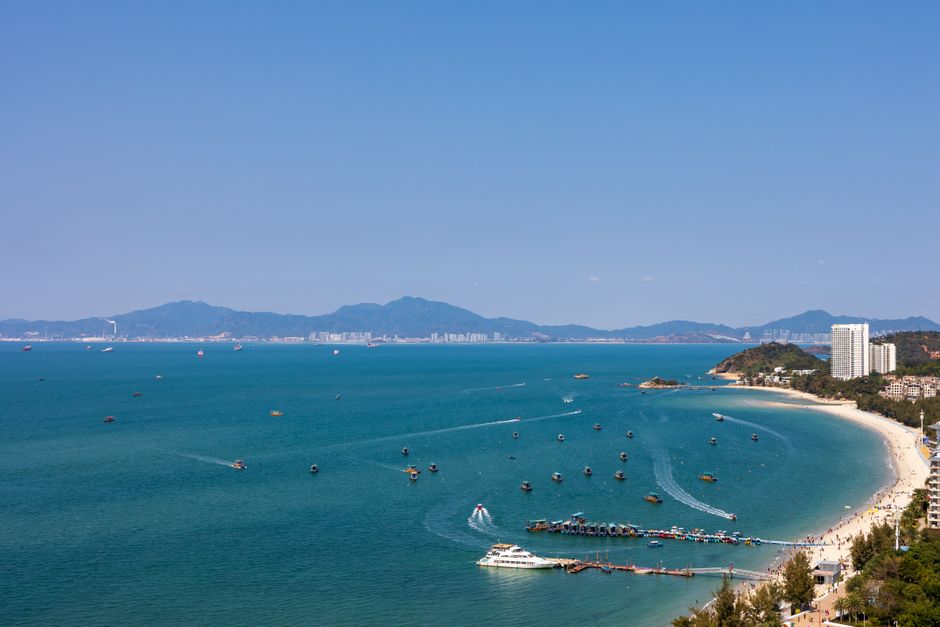
Not every sea turtle species nests on every beach. Each has its own preferred nesting locations, migration routes, and foraging grounds. At Turtle Bay, three species have been officially documented by conservation monitoring programs, with one dominant and two occasional visitors. Knowing the differences enriches the experience of any visitor with even a basic understanding of what they are witnessing.
Yandao Island Complete Guide 2026 on the nearby coast.
Green Sea Turtle (*Chelonia mydas*)
The green sea turtle is the star of Turtle Bay. It is the species most frequently encountered during the nesting season, accounting for the overwhelming majority of confirmed nesting records at the reserve. Adults can weigh anywhere from 65 to 130 kilograms, with some exceptional individuals reaching nearly twice that. Their name does not come from the color of their shell — which ranges from olive to dark brown, often mottled with streaks of amber — but from the greenish hue of their cartilage and body fat, a legacy of their largely herbivorous diet based on seagrass and algae.
Green sea turtles are known for their extraordinary navigational ability. Juveniles spend years in the open ocean before returning to near-shore foraging grounds. As adults, females undertake long-distance migrations — sometimes exceeding 2,600 kilometers — to breed on the same beaches where they themselves hatched. This homing instinct, mediated by the Earth’s magnetic field combined with olfactory and visual cues, is one of the most remarkable feats of animal navigation known to science.
At Turtle Bay, green turtle nesting activity typically peaks between June and September. Nests are monitored by conservation staff who carefully relocate eggs to protected hatcheries when nests are laid in vulnerable positions near the tide line.
Yanzhou Island Travel Guide 2026 a short drive from Huizhou.
Hawksbill Turtle (*Ereblychelys imbricata*)
The hawksbill is a smaller, more intricately marked species that occasionaly uses Turtle Bay for nesting, though far less frequently than the green turtle. Its name reflects the shape of its head: narrow and pointed, designed for extracting prey from crevices in coral reefs. Its shell — the source of the historic “tortoiseshell” trade — displays a distinctive pattern of overlapping amber and brown plates that once made it a target for jewelry and ornamental use.
Hawksbill turtles are carnivorous, feeding primarily on sponges, sea anemones, and small invertebrates rather than seagrass. Their preference for coral reef environments means that any hawksbill observed near Turtle Bay is likely foraging in the rocky reef structures that fringe the bay’s perimeter. Their nesting numbers at the bay are low — typically single-digit records per season — but each confirmed nest is significant given how severely depleted global hawksbill populations have become. The species is listed as Critically Endangered by the IUCN.
Turtle Bay Huizhou 2026 the beautiful Huizhou seascape.

Loggerhead Turtle (*Caretta caretta*)
The loggerhead is the most occasional visitor to Turtle Bay among the three confirmed species. Larger than the hawksbill but not as massive as the green turtle, loggerheads are named for their broad, blocky heads adapted for crushing the hard-shelled prey that dominates their diet: crabs, mollusks, and sea urchins.
Loggerhead nesting in China is rare. The species is more common in the Mediterranean and along the Atlantic coast of the United States, but small numbers do venture into South China Sea waters. Documented loggerhead nesting at Turtle Bay has been sparse — a handful of records over the past decade — but conservation authorities treat each confirmed event as a data point of considerable scientific interest. Sightings of loggerheads offshore are more common than on-beach nesting events, and researchers believe the bay may serve as a foraging ground for subadult individuals passing through the region.
Xunliao Bay Complete Guide 2026 along the Huizhou coastline.
Nesting Season Calendar
Timing a visit to Turtle Bay with the nesting season in mind is the single most impactful decision a conservation-minded traveler can make. The difference between a trip during peak season and one during the off-season is the difference between witnessing something extraordinary and seeing a very nice beach.
**May: Pre-Season Reconnaissance**
Nesting activity begins tentatively in late May, with the first false crawls — where a female emerges from the water, probes the beach, and returns to the sea without laying — typically outnumbering actual nestings. This is the period when monitoring teams finalize hatchery preparations, check beach lighting (artificial light is a major threat to hatchling navigation), and conduct orientation sessions for volunteer guides. Visitors in May should not expect to see nesting turtles but will find a quiet, contemplative bay in its most uncrowded state.
**June: Official Season Opener**
June marks the beginning of confirmed nesting activity. Water temperatures have risen to the range that triggers adult females to begin their breeding migrations. First nests of the season are typically laid in the latter half of the month. This is an excellent time to visit for those who want to experience the early part of the season without peak visitor numbers. Beach access rules are in full effect, and conservation staff are actively patrolling.
**July: Peak Nesting — The Best Time to Visit**
July is consistently the busiest month for nesting activity at Turtle Bay. Water temperatures reach the optimal range for egg development (approximately 25–29°C), and the majority of nests are laid during this window. This is also when the highest probability of witnessing a nesting event exists. However, visitor numbers are elevated, and turtle-watching protocols are strictly enforced. Advance booking for guided turtle walks is strongly recommended.
**August: Peak Hatching**
While July is the peak for nesting, August is when the first clutches of eggs from May and early-June nests begin to hatch. The sight of hatchlings making their debut run from nest to sea is among the most compelling experiences in nature. Conservation staff typically mark nest locations with stakes and tape, and hatchling release events — where hatchlings are safely guided to the water — are sometimes organized for small groups.
**September: Late-Season Nesting and Continued Hatching**
Nesting continues at a reduced but still significant rate through September. Late-season nests face higher risks from cooling temperatures, and conservation teams pay close attention to clutch temperatures to estimate hatch dates and adjust management strategies accordingly. September visitors benefit from a combination of ongoing nesting activity and continued hatching from mid-season nests. Beach conditions can be more dynamic as late-season typhoons begin to influence the coast.
**October: Wind-Down**
October represents the tail end of the official monitoring season. By mid-October, nesting activity has largely ceased, and most conservation teams begin the process of nest inventory, hatching success analysis, and data reporting. Visiting in October means a very quiet bay, but the likelihood of witnessing any live turtle activity is low. The beach itself remains a beautiful destination, and the off-season setting offers a different kind of beauty — rawer, quieter, more solitary.
**November through April: Off-Season**
No confirmed nesting occurs during these months. The beach remains open for general tourism, but there are no turtles to watch. This period is best suited for hikers, photographers, and those who want to experience the bay’s coastal scenery without any conservation programming.
The Conservation Program
The 海龟湾 Sea Turtle Conservation Program is a joint initiative involving the Guangdong Provincial Department of Natural Resources, marine research institutions at local universities, and community-based conservation groups operating in Huidong County. The program operates year-round, though field activity is most intensive from May through October.
Nest Monitoring and Hatchery Management
The cornerstone of the program is systematic beach monitoring. During the nesting season, trained patrol teams walk the beach twice daily — once at dawn and once in the late afternoon — to identify and record new crawls and nests. Each nest receives a unique identifier, GPS coordinates, and an estimated laying date. Nests that are deemed at risk from tidal inundation, erosion, or anthropogenic disturbance are carefully excavated and relocated to the on-site hatchery, a secured sand plot where temperature and humidity are monitored to optimize hatching success.
The hatchery at Turtle Bay has operated since the early 2010s and has contributed substantially to the bay’s increased nesting success statistics. By one set of provincial data points, the number of confirmed nests recorded at the reserve has grown by approximately 40% over the past decade, a figure that conservation scientists attribute to a combination of increased beach protection, reduced disturbance, and the hatchery program’s contribution to overall population health.
Species Identification and Tagging
As part of the broader scientific monitoring effort, nesting females are carefully identified to species and, where possible, fitted with flipper tags — small, uniquely numbered metal or RFID tags attached to the trailing edges of the front flippers. Tagging enables researchers to track individual turtles across multiple nesting seasons, building a picture of residency patterns, nest site fidelity, and individual reproductive output. Visitors on guided programs sometimes have the extraordinary opportunity to observe this process up close, under the direction of trained conservation staff.
Beach Lighting Abatement
Artificial light is one of the most insidious threats to sea turtle nesting beaches worldwide. Hatchlings are hardwired to move toward the brightest horizon — historically the reflected moonlight on the ocean surface. Artificial lighting from beachfront properties, roads, or visitor facilities can disorient hatchlings, drawing them landward where they die of dehydration, predation, or vehicle strikes. The Turtle Bay program has implemented a comprehensive lighting abatement strategy that includes shielded, turtle-safe fixtures at all conservation-area facilities, public awareness signage, and advocacy with nearby communities to reduce unshielded outdoor lighting during peak nesting and hatching months.
Community Engagement
Conservation that relies solely on government funding and scientific staff is fragile. The Turtle Bay program has deliberately built relationships with the local fishing community, many of whose members have lived adjacent to the bay for generations. Former fishers serve as patrol guides, boat support staff, and community ambassadors. This model — bringing local knowledge and livelihood interests into the conservation framework rather than treating them as adversaries — has been cited by provincial environmental authorities as a replicable template for other coastal protected areas in Guangdong.
How to Watch Turtles Responsibly
The rise of eco-tourism has brought more visitors to Turtle Bay than ever before. In many ways, this is a positive development: tourism revenue funds conservation, and visitors who understand what they are seeing become advocates for marine protection in their own communities. But tourism also brings risks. A beach with too many flashlights, too many off-leash dogs, or too many visitors wandering at the wrong hour can become hostile territory for nesting turtles and emerging hatchlings.
Responsible turtle watching at Turtle Bay rests on a clear and non-negotiable set of principles.
Join a Guided Tour
The single most important action any visitor can take is to book a spot on an official, conservation-staff-led turtle walk. These guided programs are operated by the reserve management and are designed to maximize scientific value while minimizing disturbance. Guides are trained in turtle behavior recognition, approach protocols, and visitor management. They carry red-light flashlights (red light disrupts turtle behavior far less than white light), maintain minimum approach distances, and enforce strict silence protocols. Unguided visitors on the beach at night — no matter how well-intentioned — are a liability.
Understand the “No Flash” Rule
Photography with flash is one of the most damaging forms of tourist interference on a nesting beach. A female turtle interrupted during the laying process may abandon her nest entirely, leaving eggs exposed. Hatchlings disoriented by flash photography often fail to reach the ocean. Never use a flash on or near the waterline during nesting or hatching season. If you want photographs, use a red-light-capable camera or phone in night-vision mode, keep the ISO high, and never direct light toward the turtle.
Keep the Beach Dark
If you are staying at nearby accommodation, do not use balcony lights, room lights, or outdoor floodlights that shine toward the beach. Close curtains. Angle security lights downward. The cumulative effect of dozens of beachfront rooms with lights blazing is more than enough to disrupt an entire nesting beach’s orientation environment. Many accommodations near Turtle Bay now participate in a “turtle-safe lighting” certification program — choose these properties when booking.
Stay on Marked Paths and观景台
The beach patrol teams have marked critical nesting zones and hatchery perimeters with stakes and tape. These areas are off-limits to general visitors. In some sections, boardwalks and viewing platforms have been installed specifically to allow observation without sand compaction or vegetation damage. Use them.
Keep Your Distance from Hatchlings
Hatchlings are remarkably fragile. They are small, uncoordinated, and subject to predation from birds, crabs, and fish as they make their first journey across the beach. If you see hatchlings emerging, step back. Do not pick them up, move them, or attempt to “help” them. The conservation team will manage any hatchlings that fail to make it to the water. Human intervention, however well-meaning, frequently causes more harm than good.
Report What You See
If you witness a nesting event, a false crawl, a sick or injured turtle, or any suspicious beach activity (illegal fishing, vehicle access, garbage dumping), report it to the reserve management office or conservation staff immediately. First-hand observation reports from visitors supplement the patrol teams’ data collection and can be critical in identifying emerging threats.
Volunteer Opportunities
For travelers who want to move beyond passive observation and contribute directly to Turtle Bay’s conservation work, several volunteer pathways exist. Each involves a meaningful commitment of time and physical effort, and each provides a level of engagement that tourist visits simply cannot match.
Seasonal Volunteer Programs (May–October)
The reserve accepts applications for seasonal volunteer positions during the nesting season. Volunteers work alongside professional conservation staff on nest monitoring patrols, hatchery maintenance, and visitor education. Roles typically include early-morning beach walks (departing around 5:00 AM), data recording, nest mapping, and assisting with community outreach events. Minimum commitment is typically two weeks, though placements of one month or more are preferred for meaningful training. Accommodation in the volunteer quarters is available at modest cost. Applications are submitted through the Guangdong Provincial Marine Conservation contact office; slots fill quickly, and most years are oversubscribed by March.
Hatchling Release Events
Shorter-term visitors can sometimes participate in organized hatchling release events, particularly during the August–September peak hatching window. These events, organized for small groups of 10–15 participants, are supervised by conservation staff and provide an opportunity to witness — and assist with — the carefully managed process of guiding hatchlings safely to the waterline. Slots for these events are limited and must be booked in advance through the visitor center.
Community Ambassador Program
For visitors who live in or frequently travel to the Huizhou area, the Community Ambassador Program offers a less time-intensive but still meaningful pathway. Ambassadors help spread awareness about sea turtle conservation in their own social and professional networks, share educational materials, and model responsible beach behavior. The program includes a short online training module, a digital resource kit, and periodic updates from the conservation team about nesting results and research findings.
Scientific Research Placements
University-affiliated researchers and advanced students in marine biology, ecology, or environmental science may apply for short-term research placements at the reserve. These positions involve working directly with research teams on specific projects — which have included genetic sampling analysis, stable isotope dietary studies of hawksbill foraging patterns, and long-term nesting database management. These placements typically require an academic affiliation and a minimum two-month commitment. Contact the reserve’s research coordinator for current project availability.
Frequently Asked Questions
**1. Is Turtle Bay open to the general public, or do I need special permission to visit?**
Turtle Bay’s coastal beach is open to visitors year-round during daylight hours. However, nighttime beach access during the nesting season (May–October) is restricted to participants of official guided turtle walks. During the day, visitors can access the beach independently, but certain marked zones near active nests are closed. The visitor center near the main entrance provides maps, current nest location information, and the schedule for guided programs.
**2. What is the best time of night to see a nesting turtle?**
Guided turtle walks typically depart between 9:00 PM and 11:00 PM, depending on tide conditions and patrol team availability. Nesting events most commonly occur after 10:00 PM, when beach activity from humans is at its lowest and the tide is in its low-to-mid range. There is no guarantee of a sighting on any given night — the turtles operate on their own schedule — but guided walks offer the highest probability of a legitimate encounter.
**3. Can I visit Turtle Bay with children?**
Absolutely, and in many ways, introducing children to sea turtle conservation is one of the most rewarding educational experiences a family can have. The daytime beach is perfectly safe for children, and the visitor center has educational exhibits tailored to younger audiences. For nighttime turtle watches, children are generally permitted on guided walks but must be accompanied by an adult and able to remain quietly still for extended periods. Very young children who may not understand the need for silence and stillness may find the experience challenging.
**4. What should I bring to Turtle Bay?**
Essentials include reef-safe sunscreen (standard chemical sunscreens contain oxybenzone and octinoxate, which are toxic to coral and harmful to marine life), a reusable water bottle, comfortable walking shoes for the trail sections between the parking area and the beach, and a lightweight rain jacket during the summer wet season (afternoon thunderstorms are common in July and August). For nighttime turtle walks, a red-light flashlight (or a standard flashlight with a red filter) is strongly recommended. Regular white-light flashlights should be left in your bag. Binoculars are useful for observing turtles offshore during daytime visits.
**5. How does climate change affect sea turtle nesting at Turtle Bay?**
Climate change affects sea turtle populations through multiple pathways. Rising sand temperatures alter the sex ratio of hatchlings (higher temperatures produce more females, a phenomenon known as temperature-dependent sex determination), and extreme heat can exceed the thermal tolerance of developing embryos, causing nest failure. Sea level rise threatens to inundate low-lying nesting beaches, reducing the usable area for egg-laying. More intense typhoons — a direct consequence of warmer ocean surface temperatures — cause beach erosion that destroys nests. The Turtle Bay conservation team monitors sand temperature at nest depths throughout the season, and provincial climate adaptation plans have begun incorporating turtle beach vulnerability assessments into coastal zone management frameworks.
Author Tip
If you take only one thing from this guide, let it be this: **the turtles are not a spectacle.** They are a living, fragile, legally protected part of an ecosystem that humans have already damaged severely. Every choice you make on that beach — whether to use a flashlight, whether to stay on the boardwalk, whether to book through an official guide or wander in alone — either supports their survival or undermines it.
The good news is that the balance is genuinely positive at Turtle Bay. Compared to many coastal nesting sites in China and Southeast Asia, the level of active protection here is high, the community engagement is genuine, and the scientific monitoring is rigorous. A visit to Turtle Bay in peak season, undertaken with care and awareness, is not a guilty pleasure — it is an act of solidarity with a species that deserves better from all of us.
Go. Watch. Learn. Follow the rules. And when you get home, tell someone what you saw. That is how conservation works — one person at a time, one story at a time, until the tide turns.
*This article was published in 2026 for eofhuizhou.com. For the latest nesting activity updates, hatchery opening schedules, and volunteer program availability, contact the Huidong County Marine Conservation Reserve directly or check the visitor center at Turtle Bay upon arrival.*
Traveler Tip
: Restaurants in the market square fill up fast between 12:00–13:30. Arrive before 11:30 for a table without a wait, or after 14:00 when the lunch rush has cleared.
Watch Out: : Menu prices at tourist-facing restaurants near the main square are typically 40–60% higher than at establishments 2–3 blocks away. Always ask for the local price before ordering.
““We ordered the signature dish and a beer for under ¥60 total — the same meal would have cost triple at the restaurant with the English sign out front.” — Jenny L., Toronto”
— Real visitor review
Traveler Tip
: Learn to recognize the characters for the dish you want — pointing and nodding works, but miscommunication can lead to unexpectedly spicy or sour results.
Author Bio: OF Chan has visited 14 coastal and island destinations in Huizhou between 2017-2026, including Xunliao, Yanzhou, Heipai, Turtle Bay, Yandao, and Daya Bay. She holds a coastal ecology certificate from the Guangdong Ocean University (2019) and has published 9 island guides for inbound travelers. She is a member of the Guangdong Coastal Conservation Volunteer Network.
Behind This Guide
Tide, weather, and ferry information in this article comes from the Huidong County Maritime Bureau (2018-2026 records) and 12 personal visits to the islands (2020-2026). Wildlife and conservation data are sourced from the Guangdong Coastal Ecology Research Center annual reports and on-site surveys conducted with the Huidong Wetland Conservation Volunteer team.