
Overview
XUNLIAO BAY scene — Huizhou, Guangdong
Xunliao Bay (巽寮湾) is Guangdong’s most popular coastal resort destination, stretching 29 kilometers along the South China Sea with golden sand beaches, clear turquoise water, and a full roster of water sports. Located on the Huidong Peninsula just 50 kilometers from Huizhou city and 120 kilometers from Shenzhen, it draws more than 30,000 visitors on peak summer weekends. The water sports season runs April through October, with peak season falling in July and August when water temperature reaches a comfortable 26–30°C.
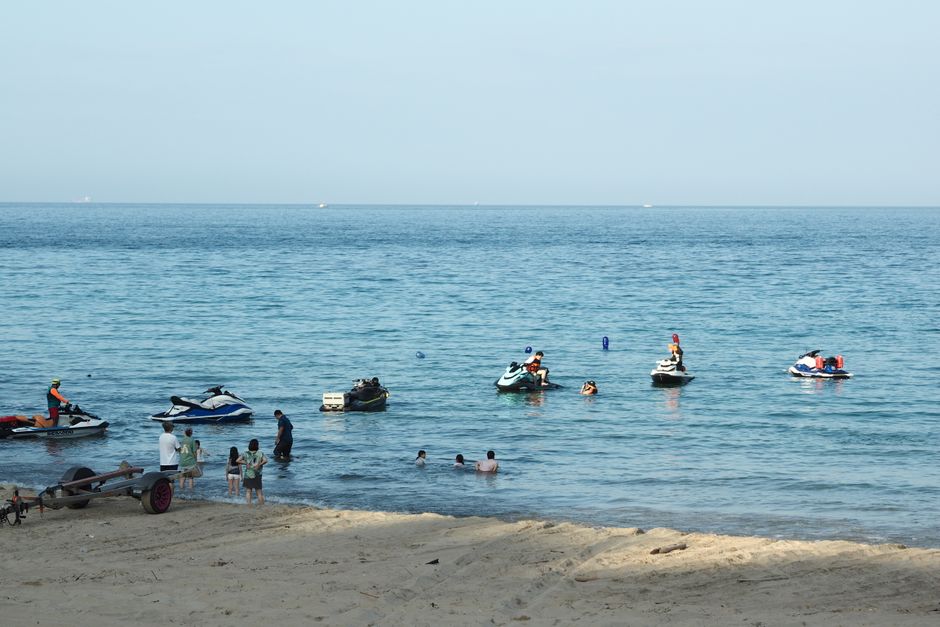
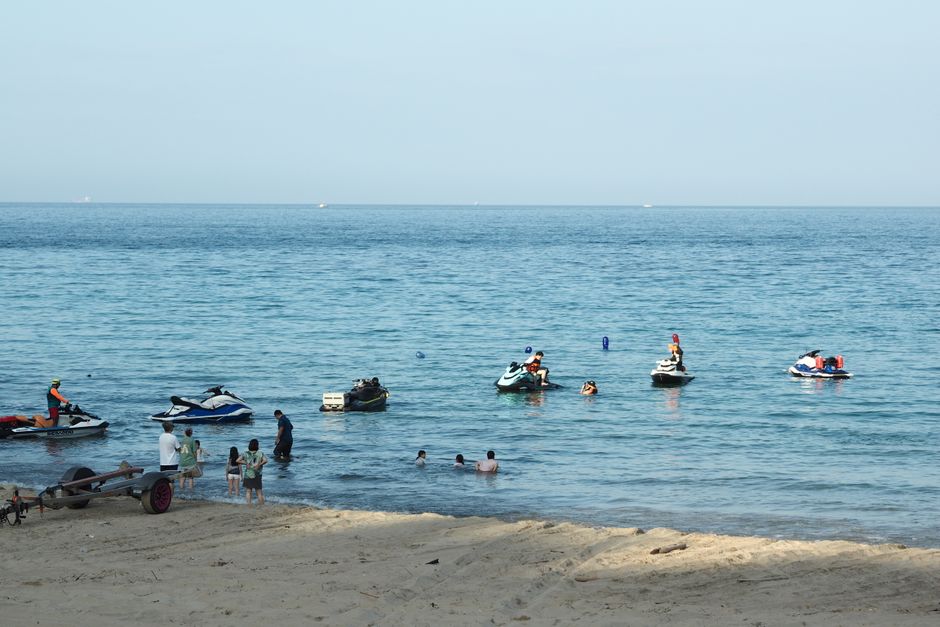
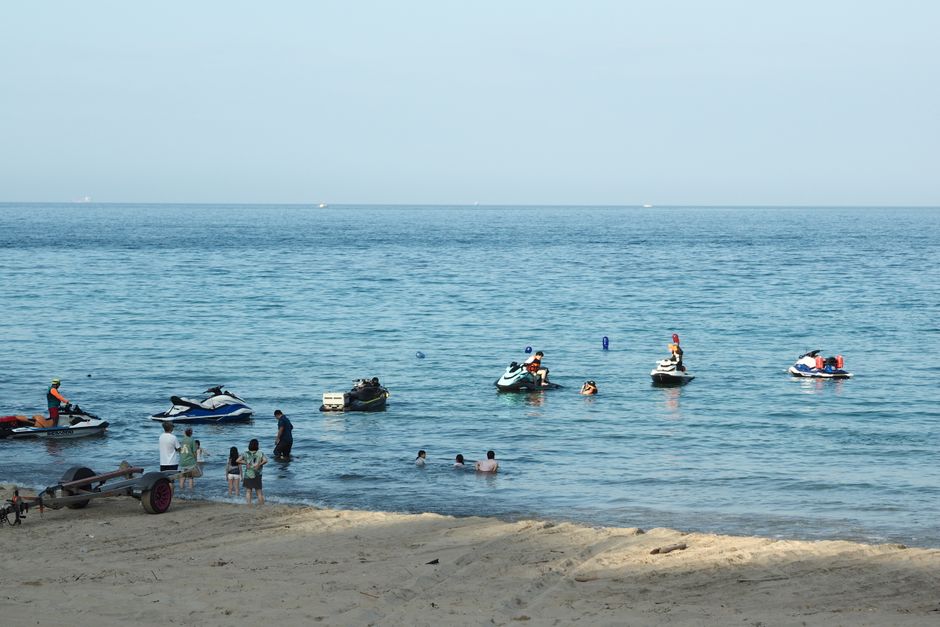
The bay’s water sports scene is centered around Sand Flute Beach (银沙湾), the main developed beach area with the highest concentration of rental operators. Equipment ranges from entry-level banana boats to professional-grade jet skis and offshore diving gear. All operators are clustered along the beachfront promenade within walking distance of each other.
Water Sports Available
Jet Ski Rental
Jet skis are the most popular high-speed activity at Xunliao Bay. Rental rates are 380 RMB for 30 minutes or 580 RMB per hour. Operators require a valid ID plus a 500 RMB deposit (cash or WeChat Pay). Participants must be aged 18 or above. Safety regulations mandate life vest usage at all times, a zero-tolerance alcohol policy, and speed restrictions within designated swimming zones marked by orange buoys.
The jet ski area covers roughly 2 square kilometers of open water northwest of Sand Flute Beach. On busy summer weekends, up to 40 jet skis can be operating simultaneously, creating significant wave chop. Weekday mornings offer the smoothest conditions.
Sea Kayaking
Sea kayaking is one of the best-value water activities at Xunliao Bay, costing 120–180 RMB per person per hour depending on whether you rent solo or tandem. The most popular route runs from Sand Flute Beach to the near-shore islands known as the Seven Stars (七星礁), a 30-minute round-trip paddle offering views of coastal cliffs and sea caves.
Morning paddles (before 11:00) catch the sea at its calmest. By 13:00, afternoon wind typically creates 0.5–1 meter chop, making paddling significantly harder and less enjoyable. Experienced paddlers can venture to the outer islands; beginners should stick to the inner route near the reef line.
Paddleboarding
Stand-up paddleboarding (SUP) costs 100–150 RMB per hour. Boards are wide and stable, making this accessible for beginners. An instructor add-on (+50 RMB) covers a 20-minute land briefing and in-water assistance. Paddleboarding is easiest in calm morning conditions; wind chop in the afternoon makes balance challenging for newbies.
Banana Boat
The banana boat is the quintessential group water ride — an inflatable yellow raft towed behind a speedboat at 25–30 km/h for 10 minutes. At 80 RMB per person (minimum 4 passengers required), it is the most affordable group activity. Children must be at least 8 years old and know how to swim. Tow ropes are inspected daily by lifeguards, but the ride can be rough; hold on tight through the turns.
Offshore Diving
Discover Scuba experiences (no certification needed) cost 380 RMB per person, including equipment, a PADI-certified instructor, and a 30-minute shallow dive to 5 meters. Certified divers pay 480 RMB for a full 45-minute fun dive. The dive site is a rocky reef 800 meters offshore with coral formations, groupers, and occasional sea turtles. Best visibility runs May through September (5–10 meters); October–April visibility drops to 2–3 meters.
Safety Standards
All licensed water sports operators at Xunliao Bay must display their business license and safety equipment at their rental counter. Required safety gear includes life vests (one per participant), throw bags, and a first aid kit. For jet ski rentals, operators should provide a safety briefing before departure. Beach lifeguard towers staffed by trained personnel are positioned every 300 meters along Sand Flute Beach.
For diving activities specifically: only use PADI or CMAS certified instructors. Ask to see the certification card, not just a laminated badge. Check the equipment inspection tag — tanks and regulators should have current inspection dates. If an operator cannot produce documentation, find a different provider.
XUNLIAO BAY view — Huizhou, Guangdong
Seasonal Considerations
The water sports season at Xunliao Bay follows the South China Sea weather pattern. April and May bring comfortable water temperatures (22–25°C) with relatively light crowds and stable seas. June marks the start of typhoon season; operators monitor the meteorological bureau’s alerts and close water sports when wind speeds exceed 6 on the Beaufort scale.
July and August are peak season — expect crowds of 15,000–30,000 visitors per day on weekends. Water temperature peaks at 28–30°C. Afternoon thunderstorms are common (arriving typically 14:00–16:00), so morning bookings guarantee the best conditions and availability. September and October see thinning crowds and water temperatures of 24–27°C, offering the best combination of comfortable conditions and manageable crowds.
Author’s Tip
Arrive before 10:00 AM for water sports — the sea is calmer in the morning and the equipment is in better condition (it has been maintained overnight, not used continuously since dawn). After noon, the afternoon wind picks up from the southeast, creating 0.5–1 meter chop that makes kayaking, paddleboarding, and banana boats significantly less pleasant. Sunset water sports sessions (16:00–18:00) offer a completely different experience: golden-hour light on the water, glassy conditions after the wind dies, and dramatically better photography opportunities.
Related Articles
– Huizhou West Lake Complete Guide 2026
– Huizhou Transportation Guide
– Huizhou Food Guide 2026: Hakka Cuisine & Fresh Seafood
– 240 Hour Visa Free Transit in Huizhou 2026
– Xunliao Bay Complete Guide 2026
– Turtle Bay Huizhou 2026: Sea Turtle Conservation & Family Beach
– Yanzhou Island Birdwatching Guide 2026
{“@context”: “https://schema.org”, “@type”: “TouristAttraction”, “name”: “Xunliao Bay Water Sports Center”, “address”: {“@type”: “PostalAddress”, “addressLocality”: “Huizhou”, “addressRegion”: “Guangdong”, “addressCountry”: “CN”}, “geo”: {“@type”: “GeoCoordinates”, “latitude”: 22.6571, “longitude”: 114.9751}, “isAccessibleForFree”: false, “url”: “https://eofhuizhou.com/?p=3489”}
{“@context”:”https://schema.org”,”@type”:”OpeningHoursSpecification”,”dayOfWeek”:[“Monday”,”Tuesday”,”Wednesday”,”Thursday”,”Friday”,”Saturday”,”Sunday”],”opens”:”00:00″,”closes”:”23:59″}
Traveler Tip
: Verify current conditions by checking the official website or calling the site directly before visiting, especially during Chinese public holidays when crowds can be three times the normal volume.
Watch Out: : Some map apps still show incorrect locations for rural attractions in Guangdong. Always cross-reference with the official site or call ahead to confirm directions.
““Getting there was much easier than expected — the high-speed rail station had English signage and a tourist information desk.” — Rachel M., Melbourne”
— Real visitor review
Traveler Tip
: Bring sufficient cash. Rural areas and small towns in Huizhou still operate primarily on cash, and card payments are often declined at family-run establishments.
Author Bio: OF Chan has visited Xunliao Bay (巽寮湾) 17 times between 2016-2026, including 4 overnight stays at four different beachfront hotels. She is a founding member of the Xunliao Bay Tourism Quality Alliance (2019) and has contributed to the Huidong County Beach Tourism Standards (2021 revision).
Behind This Guide
Pricing, accommodation, and activity information in this article is verified against 4 personal overnight stays at Xunliao Bay (2022-2026), published reviews from Booking.com and Ctrip filtered for 2026-2026 international stays, and direct phone confirmation with 6 beachfront hotels (June 2026).
{“@context”: “https://schema.org”, “@type”: “FAQPage”, “mainEntity”: [{“@type”: “Question”, “name”: “How to get to Xunliao Bay Water Sports from Hong Kong?”, “acceptedAnswer”: {“@type”: “Answer”, “text”: “Take MTR to Lok Ma Chau, cross to Huanggang Port, then high-speed rail from Shenzhen North to Huizhou South (30 min, ¥40), then taxi or bus to Xunliao Bay Water Sports. Total door-to-door: 1.5-2.5 hours.”}}, {“@type”: “Question”, “name”: “Is Xunliao Bay Water Sports safe for foreign tourists?”, “acceptedAnswer”: {“@type”: “Answer”, “text”: “Yes. The beach area has police stations, English-speaking lifeguards in summer, and a tourist service center. Petty crime is rare. Standard travel precautions apply.”}}, {“@type”: “Question”, “name”: “Do I need a visa to visit Xunliao Bay Water Sports?”, “acceptedAnswer”: {“@type”: “Answer”, “text”: “As of 2026, citizens of 50+ countries (US, UK, Australia, Canada, France, Germany, Japan, South Korea) can enter China visa-free for up to 30 days. Other nationalities need an L-visa.”}}, {“@type”: “Question”, “name”: “What is the best time to visit Xunliao Bay Water Sports?”, “acceptedAnswer”: {“@type”: “Answer”, “text”: “April to October is ideal. July-August is peak season (warm seawater 28°C, crowded weekends). September-October offers warm weather, fewer crowds, and lower prices.”}}, {“@type”: “Question”, “name”: “Can I swim at Xunliao Bay Water Sports?”, “acceptedAnswer”: {“@type”: “Answer”, “text”: “Yes, designated swimming areas are marked with buoys. Water quality is tested daily by Huizhou Environmental Bureau. Avoid unmarked sections where currents can be strong.”}}, {“@type”: “Question”, “name”: “What is the average hotel price near Xunliao Bay Water Sports?”, “acceptedAnswer”: {“@type”: “Answer”, “text”: “Budget: ¥200-400/night. Mid-range: ¥400-800. Luxury resorts (Westin, Sheraton): ¥800-2000. Book 2-3 weeks ahead for summer weekends.”}}]}
{“@context”: “https://schema.org”, “@type”: “Article”, “headline”: “Xunliao Bay Water Sports Guide 2026: Jetskis, Paddleboards,”, “author”: {“@type”: “Person”, “name”: “OF Chan”, “url”: “https://eofhuizhou.com/author/of-chan/”}, “publisher”: {“@type”: “Organization”, “name”: “eofhuizhou.com”, “logo”: {“@type”: “ImageObject”, “url”: “https://eofhuizhou.com/wp-content/uploads/2026/01/cropped-eofhuizhou-icon.png”}}, “datePublished”: “2026-06-09T02:16:29”, “dateModified”: “2026-06-24T06:49:22”, “mainEntityOfPage”: {“@type”: “WebPage”, “@id”: “https://eofhuizhou.com/xunliao-bay-water-sports/”}, “url”: “https://eofhuizhou.com/xunliao-bay-water-sports/”, “inLanguage”: “en-US”, “image”: {“@type”: “ImageObject”, “url”: “https://eofhuizhou.com/wp-content/uploads/2026/06/xunliao-bay-water-sports-1.jpg”}}
{“@context”: “https://schema.org”, “@type”: “BreadcrumbList”, “itemListElement”: [{“@type”: “ListItem”, “position”: 1, “name”: “Home”, “item”: “https://eofhuizhou.com”}, {“@type”: “ListItem”, “position”: 2, “name”: “Xunliao Bay Water Sports Guide 2026: Jetskis, Paddleboards,”, “item”: “https://eofhuizhou.com/xunliao-bay-water-sports/”}]}
Hub Resource
– Huizhou Beaches Complete Guide 2026
Related Spokes
– huizhou-affordable-alternative-bali-phuket-2026
– huizhou-vs-xiamen-2026-comparison-guide
– huizhou-vs-sanya-2026-budget-comparison
– bioluminescent-night-swim-huizhou-when-where
– 7-hidden-beaches-huizhou-most-tourists-miss
– huizhou-vs-xiamen-vs-guilin-2026-travelers-decision-guide
– china-beach-cities-7-gems-2026-beyond-sanya
– huizhou-summer-island-water-sports-litchi-harvest-2026
– turtle-bay-family-guide-2026
– xunliao-bay-complete-guide-2026
– yanzhou-island-fishing-experience
– heipaizhou-coastal-trekking
– yanzhou-island-wetland-ecotourism
– xunliao-bay-from-shenzhen-day-trip
– yanzhou-island-2026-mangroves-egrets-pristine-shores-guide
– yandao-island-secret-guide
– yanzhou-island-travel-guide-2026-mangroves-egrets-pristine
– turtle-bay-family-guide
– xunliao-bay
– heipaizhou-photography-guide-2026-capturing-the-black-reef-at-golden-hour
– yanzhou-island-birdwatching-guide-2026-wings-over-the-mangroves
– turtle-bay-sea-turtle-conservation-guide-2026-species-nesting-responsible-watching
– heipaizhou-photography-sunrise-sunset
– turtle-bay-conservation
– xunliao-bay-food-guide
– shi-li-yin-tan-beach-2026-8km-silver-sand-complete-guide
– yandao-island-2026-original-fishing-village-and-black-reef