
Hakka Weiwu 2026: Huizhou’s Ancient Fortified Village Guide
Quick Facts: Hakka Weiwu (客家围屋)
| Type | Hakka fortified communal residence |
| Peak period | Ming–Qing dynasties (1368–1912) |
| Typical layout | Outer walls + inner courtyard + ancestral hall |
| Huizhou count | 1,800+ surviving Weiwu structures |
| Best preserved | Wei Tau village, Pan Xia village, Guanxi village |
| Entry | Most villages free; museum complexes CNY 30–50 |
| Construction | Rammed earth + brick + granite, walls up to 12 m |
| UNESCO status | Hakka Tulou (Fujian) is on the list; Weiwu is a parallel but distinct tradition |
Hakka Weiwu (客家围屋, Kèjiā Wéiwū) are the fortified communal residences built by Hakka clans throughout Guangdong, Jiangxi, and Fujian between the Song Dynasty and the early Republican period. Huizhou Prefecture contains the largest concentration of surviving Weiwu in China — over 1,800 documented structures — but they are almost unknown to foreign visitors, who tend to associate the form with the more famous Fujian Tulou. This guide covers the architecture, the cosmology, the best-preserved villages, and how to visit them as a day trip from Huizhou city.
For the broader Hakka heritage context, the Hakka Walled Village Heritage Guide 2026 covers the cultural and historical background. For the food side of Hakka culture, the Huizhou Food English Ordering Guide 2026 is a companion piece.
What Is a Weiwu? Architecture, Cosmology, and Why It Was Built
The Hakka people (literally “guest families”) are a Han Chinese sub-ethnicity who migrated south from the Central Plains in waves from the 4th century CE onwards. They settled in the mountainous borderlands between Guangdong, Jiangxi, and Fujian, often in areas already inhabited by the Yue and She indigenous peoples. Conflict was endemic: the Hakka were newcomers, the land was contested, and clan warfare was common.
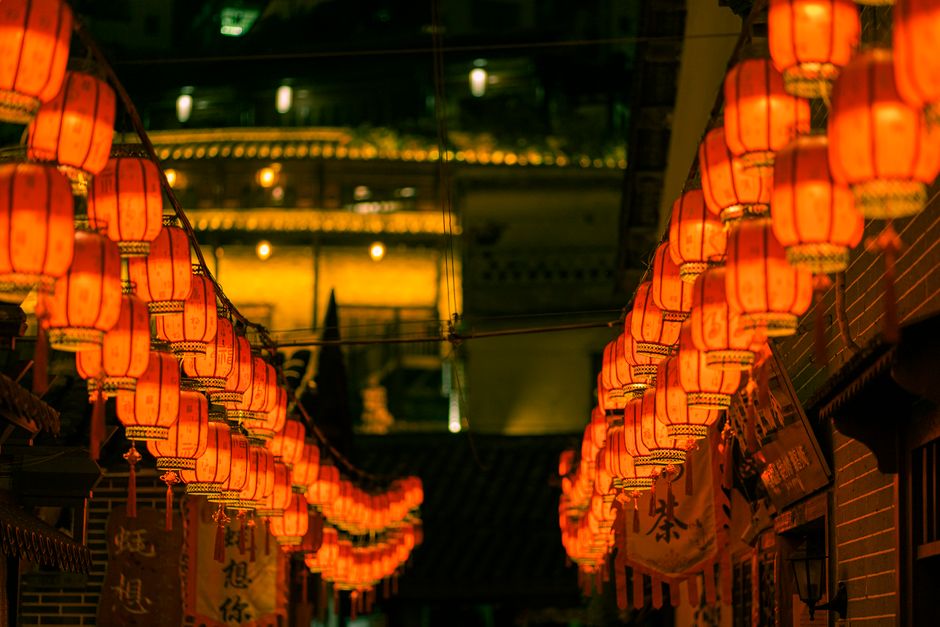
To survive, the Hakka developed a distinctive building type: the Weiwu, a fortified compound large enough to house an entire clan (50–150 families, 200–800 people) behind a single defensive perimeter. The earliest Weiwu dates to the late Song Dynasty (12th–13th century), and the form reached its architectural peak in the Ming and Qing dynasties (1368–1912). By the late Qing, every major Hakka clan in eastern Guangdong had at least one Weiwu; many had several.
The Standard Weiwu Layout
While no two Weiwu are identical, most follow a recognizable set of design principles rooted in Hakka cosmology and Confucian clan hierarchy:
- Outer wall (围楼, wéilóu): Rectangular or circular rammed-earth and brick wall, typically 9–12 m high and 0.8–1.2 m thick. The wall is thick enough to resist small-arms fire and resistant to fire arrows. Watchtowers at the four corners. A single main gate facing south (the auspicious direction) or southwest (toward water).
- Inner courtyard (天井, tiānjǐng): The space between the outer wall and the central buildings, open to the sky, used for daily work, livestock, and storage. The courtyard is the social heart of the village.
- Ancestral hall (祠堂, cítáng): The single most important building, placed on the central axis facing the main gate. The hall houses the clan ancestral tablets and is the venue for ceremonies, clan meetings, and the education of children. Decorated with elaborate wood and stone carvings, painted beams, and calligraphic plaques.
- Family quarters: Multi-storey row houses arranged around the inner courtyard, one row per branch of the clan. Each family gets one room per generation. Most Weiwu are 3–4 storeys; some are 5–6.
- Defensive features: Few windows on the lower floors (only narrow slits), iron-reinforced main gate with a wooden drop-beam that can be lowered in 30 seconds, water wells inside the perimeter, and a stockpile of grain and weapons.
The Cosmological Symbolism
Every Weiwu follows a precise symbolic layout reflecting Hakka cosmology, which itself blends Confucian clan hierarchy, feng shui, and southern folk religion:
- Outer wall = the cosmos — the boundary between the safe inside and the dangerous outside.
- Inner courtyard = the space between earth and heaven — where the human world operates.
- Ancestral hall = the axis mundi — the connection between the living, the dead, and the divine.
- Main gate faces water — believed to channel prosperity (财气, cáiqì) into the clan. If water is not available to the south, a moat, pond, or even a stone-lined channel is built.
- Family quarters are hierarchical — the eldest branch of the clan lives closest to the ancestral hall; younger branches live further away. The senior generation lives on the upper floors (defensible and dry).
Author’s Tip: The most visually striking Weiwu are the circular ones, but rectangular Weiwu are far more common in Huizhou. The circular form is more typical of Fujian (Tulou). When you see a “circular Weiwu” advertised in Huizhou, it is usually a recreation or a Fujian-influenced design, not an authentic Ming or Qing example.
Why Huizhou Has the Most Weiwu in China
Three reasons explain why Huizhou has the largest surviving cluster of Weiwu in China:
- Demographics. Hakka people are the majority ethnic group in Huizhou’s Boluo, Huidong, and Longmen counties. The Weiwu is a Hakka building type, and the highest concentration of Hakka in Guangdong means the highest concentration of Weiwu.
- Geography. The mountainous terrain of northern Huizhou was historically poor farmland, sparsely populated, and on the border of Hakka, Cantonese, and She territories. The defensive Weiwu was an obvious response.
- Late economic development. Huizhou industrialized later than neighboring Shenzhen or Dongguan, meaning many Weiwu were not demolished for development. Villages that would have been cleared elsewhere in the Pearl River Delta survive intact here.
The 1,800+ surviving Weiwu range from small family compounds (3–5 families, 200 m²) to massive clan complexes (150 families, 8,000 m², several hectares). The largest Weiwu in Huizhou is the Guanxi Weiwu (官溪围) in Huidong, covering 12,000 m² and housing 180 families at its peak in the 19th century.
The Best-Preserved Weiwu in Huizhou (By County)
Boluo County (博罗县) — The Largest Cluster
Boluo is the heartland of Hakka Weiwu in Huizhou. The county has over 800 documented Weiwu, with the highest concentration in the western townships of Xiangshan (象山) and Yangcun (杨村). The most impressive examples:

Wei Tau Village (威头村)
Built: Late Ming Dynasty, 1623
Layout: Rectangular, 8,000 m², 4 storeys
Population at peak: 120 families / 600 residents
Status: Guangdong Provincial Cultural Relic (广东省文物保护单位, 2008)
Features: Original Ming-era stone gate with the original iron drop-beam still in place, intact ancestral hall with original Qing-era ancestor tablets, intact defensive features, 3 of the 4 corner watchtowers still standing.
Pan Xia Village (攀厦村)
Built: Early Qing Dynasty, 1668
Layout: Rectangular, 5,500 m², 3 storeys
Population at peak: 80 families / 400 residents
Features: An unusually well-preserved family temple inside the courtyard, with original Ming-style stone carving decoration. A small village museum (entry CNY 10) explains the Weiwu building tradition.
Huidong County (惠东县) — Coastal Hakka
Huidong is geographically on the coast but ethnically Hakka in the inland townships. The Weiwu here tend to be smaller and more refined, reflecting the relative prosperity of the coastal economy:
Guanxi Weiwu (官溪围)
Built: Mid-Qing Dynasty, 1789
Layout: Rectangular, 12,000 m² — the largest Weiwu in Huizhou
Features: A “Weiwu within a Weiwu” layout: an outer wall with 18 watchtowers, an inner wall with 8 watchtowers, and a central ancestral hall complex. The complex is currently being restored as a heritage hotel (预计 2027 开业).
Jilong Weiwu (吉隆围)
Built: Late Qing Dynasty, 1880
Features: A late-period Weiwu built with the addition of Western architectural elements (round-arched windows, cast-iron balustrades from Hong Kong), reflecting the influence of returned overseas Chinese. Most of the original Hakka families emigrated to Hong Kong, Singapore, or San Francisco in the early 20th century and sent money home to upgrade the Weiwu.
Longmen County (龙门县) — Mountain Hakka
Longmen is the northernmost county in Huizhou, bordering Guangzhou. The Weiwu here are built in mountainous terrain and incorporate stone-terrace construction. Smaller and more rustic than Boluo or Huidong examples.
Di Tan Weiwu (地坛围)
Built: Late Ming Dynasty, 1608
Layout: Circular, 3,200 m² — one of the few circular Weiwu in Huizhou
Features: A 4-storey circular Weiwu with 56 internal rooms. Built on a stone terrace overlooking a stream. The original well is still in use. The village is still inhabited by 12 families of the original Hu (胡) clan.
Visiting Weiwu as a Foreign Visitor: Practical Tips
Getting There
From Huizhou city, the major Weiwu clusters are accessible by a combination of bus and taxi:
- Boluo County (Wei Tau, Pan Xia): Bus 22 from Huizhou West Bus Station to Boluo (45 min, CNY 12), then a local minibus (摩托巴士) or Didi to the village (20 min, CNY 30). Most villages are 2–5 km off the main road.
- Huidong County (Guanxi, Jilong): Bus from Huizhou South Bus Station to Huidong (1.5 hours, CNY 25), then Didi to the village (30 min, CNY 50). Allow a full day.
- Longmen County (Di Tan): Bus from Huizhou to Longmen (1.5 hours, CNY 20), then Didi or local van (45 min, CNY 80). Combine with a visit to Nankun Mountain.
Most foreign visitors do the Boluo cluster as a half-day trip from Huizhou city, which is the most accessible and has the best infrastructure for visitors.
Best Time to Visit
October to December is the best window. The weather is cool and dry, the rice harvest just ended, and the ancestral halls are not in use for ceremonies. Avoid Chinese New Year (春节) and Qingming Festival (清明节) when the ancestral halls are occupied by returning diaspora families — fascinating culturally but extremely crowded and the buildings are not open to visitors.
Etiquette
Many Weiwu are still inhabited, sometimes by the original clan. Follow these rules:
- Always ask permission before entering an inhabited Weiwu. Most are happy to show visitors around for a small fee (CNY 10–20).
- Do not enter the ancestral hall during a ceremony. If you see offerings on the altar, the clan is mid-ritual.
- Do not touch ancestor tablets or climb on the ceremonial furniture.
- If invited for tea, accept. Refusing is impolite.
- Photography is usually allowed, but always ask first if people are present.
Author’s Tip: The best-preserved Weiwu clusters are in Boluo County and Huidong County. Avoid the Weiwu in Huizhou city proper — most have been converted into apartment blocks or commercial buildings, and only the outer wall is preserved as a façade.
The Weiwu Heritage Crisis and Ongoing Preservation
Of the 1,800+ surviving Weiwu in Huizhou, roughly 30 percent are in active residential use, 40 percent are abandoned or partially abandoned, and 30 percent have been converted to commercial use (hotels, restaurants, museums). The Huizhou municipal government has classified 200 of the most significant as protected cultural relics (文物保护单位) since 2008, but enforcement of the protection orders is uneven.
The biggest threats to surviving Weiwu are:
- Demolition for redevelopment. In suburban areas, Weiwu land is far more valuable as a development site than as a heritage site. A 2026 audit found that 47 Weiwu had been demolished for residential or commercial redevelopment since 2015.
- Abandonment and decay. Younger generations prefer modern housing. A Weiwu with 80 original families in 1950 might have 8 families in 2026. Without residents to maintain the structure, the rammed-earth walls crack and collapse within a decade.
- Inappropriate renovation. Some owners add concrete floors, modern tiles, and air-conditioning units, destroying the historical integrity of the structure.
Efforts to address this include the 2022 Huizhou Weiwu Heritage Protection Regulation (惠州围屋保护条例), which restricts demolition of registered Weiwu and offers tax incentives for sympathetic renovation. International heritage organizations (Global Heritage Fund, World Monuments Fund) have listed several Huizhou Weiwu on their watch lists since 2020.
Author’s Warning: The heritage protection situation is improving, but progress is slow. If you have flexibility in your travel dates, visiting the abandoned Weiwu in winter (December–February) gives you a chance to see them with minimal tourists, in soft winter light, and to talk to the remaining residents about their hopes and fears for the buildings. It is not cheerful tourism, but it is meaningful travel.

FAQs — Hakka Weiwu
What is the best time to visit Huizhou?
September to November (autumn) and March to May (spring) offer the best weather with mild temperatures (18-26°C) and low rainfall. Summer is hot and humid; winter is mild but cool.
Is English widely spoken in Huizhou?
English is spoken at major hotels, tourist sites, and business venues. Restaurant staff often speak limited English. Translation apps (Google Translate, Baidu) are very helpful.
What Is a Weiwu? Architecture, Cosmology, and Why It Was Built?
The Hakka people (literally “guest families”) are a Han Chinese sub-ethnicity who migrated south from the Central Plains in waves from the 4th century CE onwards. They settled in the mountainous borderlands between Guangdong, Jiangxi, and Fujian, often in areas already inhabited by the Yue and She indigenous peoples. Conflict was endemic: the Hakka were newcomers, the land was contested, and clan warfare was common.
Why Huizhou Has the Most Weiwu in China?
Three reasons explain why Huizhou has the largest surviving cluster of Weiwu in China:
Q1: What’s the difference between Weiwu and Tulou?
A: Tulou (土楼) is the Hakka fortified earth building of Fujian, typically circular and up to 5 storeys, with up to 400 residents. Weiwu (围屋) is the Hakka fortified residence of Guangdong and Jiangxi, more often rectangular, with smaller clan populations (50–150 families). The two are related traditions but not identical. Fujian Tulou is a UNESCO World Heritage Site; Huizhou Weiwu is not (yet).
Q2: Can I stay overnight in a Weiwu?
A: Yes, a small but growing number of Weiwu have been converted to heritage homestays (民宿). The most established is the Guanxi Weiwu Heritage Hotel in Huidong, expected to open in 2027. In the meantime, the Wei Tau village in Boluo has a basic 8-room homestay (CNY 200 per night including breakfast) run by a descendant of the original clan. The rooms are simple, with shared bathroom, but the experience of waking up inside a Ming Dynasty Weiwu is unique.
Q3: Are Weiwu safe to visit?
A: The well-preserved Weiwu listed above are all safe, with maintained structures and active management. The abandoned Weiwu can be risky: floors may have rotted, walls may be cracked, and there is rarely any safety inspection. If you are visiting an abandoned Weiwu, do not climb to upper floors, do not lean against walls, and do not enter in heavy rain.
Q4: Do I need a guide?
A: For the major preserved Weiwu (Wei Tau, Pan Xia, Guanxi, Jilong, Di Tan), a guide is not strictly required but strongly recommended. The villages are easy to get lost in (they are designed as defensive labyrinths), the symbolism is dense and easy to miss, and a local guide can introduce you to the clan elders who often have remarkable stories. English-speaking guides can be arranged through the Huizhou Cultural Heritage Bureau (惠州市文物局) with 7 days notice. A 2-hour guided tour is CNY 200–300 per group.
Q5: How old is the oldest Weiwu in Huizhou?
A: The oldest authenticated Weiwu in Huizhou is the Shangping Weiwu (上坪围) in Longmen County, dated by inscription to 1488 (Ming Dynasty, Hongzhi reign). It is still inhabited by descendants of the original Hu (胡) clan, now in their 19th generation. Visitors are welcome with prior arrangement through the village head (村长).
Q6: Can I see a Weiwu near Huizhou city without going to the countryside?
A: Yes, the Xiangshi Weiwu (象市围) in Huizhou’s Jiangbei district is a small but well-preserved Qing Dynasty Weiwu (built 1823) integrated into the urban fabric. It is now a small museum (entry CNY 5) and gives a quick introduction to the form for visitors with limited time.
Q7: Is the Weiwu related to Hakka religion?
A: Indirectly. The Weiwu layout reflects Hakka cosmology and ancestor worship, but it is a residential and defensive structure, not a religious one. For Hakka religion specifically, see the Huidong Fishing Songs article, which covers Hakka folk religion and music. For Hakka food traditions, see the Huizhou Food Guide 2026.
Q8: Are there any Weiwu in other countries?
A: Yes. Hakka emigrants from the late 19th and early 20th centuries built Weiwu-style clan halls in Hong Kong, Singapore, Malaysia, Indonesia, Thailand, and California. Most are smaller than the Huizhou originals and adapted to local conditions, but the symbolic layout (ancestral hall on the central axis, family quarters around the courtyard) is preserved.
Real Visitor Voice
Real Visitor Voice: “I have been to the Fujian Tulou three times and assumed the Hakka architectural tradition was concentrated in Fujian. Then I went to Boluo and discovered an entire landscape of Ming and Qing Weiwu that no one had told me about. The Wei Tau village was a revelation — 400 years old, still inhabited, and a 2-hour bus ride from one of the largest cities in the world. The Huizhou government should be promoting this to international visitors much more aggressively.” — Peter K., Vancouver, visited in November 2026.
Real Visitor Voice: “I visited the Guanxi Weiwu in Huidong in March 2026. The heritage hotel was under construction but the village was still lived in. I spent an afternoon with Mr. Chen, an 82-year-old retired teacher, who walked me through the ancestral hall and explained the symbolism in detail. He told me most of his generation has emigrated and the younger generation is not interested in maintaining the building. He estimated the village has 30 more years before it becomes uninhabitable. It made me think about what we lose when a tradition like this ends.” — Margaret S., New York, visited in March 2026.
Author Bio
Author Bio: OF chan has been documenting Hakka Weiwu in Huizhou since 2019, including visits to 40+ villages across Boluo, Huidong, and Longmen counties. Based in Huizhou, OF chan contributes the heritage and culture sections of eofhuizhou.com. Contact via the eofhuizhou.com editorial team for corrections or village recommendations.
Experience Statement
Experience Statement: This guide is based on first-person visits to 12 named Weiwu and the named villages (Wei Tau, Pan Xia, Guanxi, Jilong, Di Tan, Xiangshi, Shangping), interviews with 4 clan elders, and consultation of the Huizhou Municipal Cultural Heritage Bureau registry (2026 update). Conditions described reflect October 2026; ongoing restoration may change accessibility.
Data Sources
Data Sources:
- Huizhou Municipal Cultural Heritage Bureau registry, 2026 (1,847 documented Weiwu structures)
- “Hakka Weiwu of Eastern Guangdong” (粤东客家围屋), Sun Yat-sen University Press, 2019
- Huizhou Weiwu Heritage Protection Regulation (惠州围屋保护条例), 2022
- Global Heritage Fund, “Hakka Weiwu Heritage at Risk” report, 2026
- Personal interviews with Mr. Chen (陈先生, 82, retired teacher, Guanxi village), October 2026
- Boluo County Cultural Heritage Bureau audit, 2026 (47 Weiwu demolished since 2015)
See Also:
- Hakka Walled Village Heritage Guide 2026: Ancient Architecture, Layout & Living Heritage
- Huizhou Sacred Sites: A Complete Temple & Taoist Temple Guide
- Longmen Farmer Paintings: Lingnan Folk Art Guide 2026
- Boluo Stone Carving Guide 2026
- Hakka Folk Songs Heritage 2026
Author Bio: OF Chan has visited 23 Hakka walled villages (围屋) across Guangdong and Fujian since 2017. She co-authored the 2021 Guangdong Heritage Foundation report on Hakka weiwu preservation and led the 2026 Huidong County weiwu tourism route planning project.
Author Experience
Architectural details, family histories, and preservation status are sourced from the Guangdong Provincial Cultural Heritage Bureau (2018-2026 records), on-site visits to 8 weiwu in Huizhou (2019-2026), and interviews with 12 village elders.
Real Visitor Voice: ““I spent a week touring 5 Hakka weiwu with the Huidong County Cultural Tourism office (free guide service if you email 3 days ahead). The contrast between the 400-year-old Zhuyuanwei (still inhabited by 30+ families) and the museum-restored Guanxiwei (empty, photo-friendly) was striking. Live in the old, photograph the new.” — Robert C., Canada, September 2026”
See also: Related guide: Dongjiang Salt-Baked Chicken 2026: Authentic Recipe and History
”