
Huizhou Traditional Holidays 2026: Dragon Boat, Mid-Autumn & Spring Festival Guide
China’s three biggest traditional holidays — Dragon Boat, Mid-Autumn, and Spring Festival — fall within a six-month window each year, and Huizhou celebrates each one with distinctive Hakka rituals that you will not see in Shanghai, Beijing, or even Guangzhou. This guide covers the exact 2026 dates, the cultural meaning of each festival in Huizhou specifically, and where to go in and around the city to experience the celebrations authentically.
TL;DR — Huizhou’s Three Big Holidays at a Glance
| Holiday | 2026 Date | Lunar Date | Duration | Huizhou Highlight | Crowds |
|—|—|—|—|—|—|
| Dragon Boat Festival (端午) | Fri Jun 19 – Sun Jun 21 | 5th of 5th lunar month | 3 days | Xunliao Bay dragon boat race + zongzi | High (GBA-wide event) |
| Mid-Autumn Festival (中秋) | Thu Sept 24 – Sat Sept 26 | 15th of 8th lunar month | 3 days | West Lake lantern walk + mooncake trail | Medium (local + HK) |
| Spring Festival (春节) | Tue Feb 17, 2026 (CNY) – Feb 24 | 1st of 1st lunar month | 7 days | Weiwu ancestral ceremonies + Hakka reunion feast | Very high (everywhere) |
Traveler Tip
: The single most authentic Huizhou holiday experience is Chinese New Year inside a Hakka walled village (Weiwu, 围屋). Every clan gathers in the ancestral hall on New Year’s Eve, performs the three offerings (三祭) to the ancestors, then shares a 12-dish Hakka banquet that includes salt-baked chicken, lei cha, stuffed tofu, and Hakka rice wine. Most Weiwu open their ancestral halls to respectful visitors during the 7-day holiday — but only by arrangement with the village head 2–3 weeks in advance. The combination of diaspora family members returning from Hong Kong, Singapore, and California, plus the full ceremonial protocol, is a cultural experience that is increasingly rare in modern China.
Watch Out: : The week before Chinese New Year (the “chunyun” 春运 travel season) is the single worst week of the year to visit Huizhou. Trains and buses from Guangzhou, Shenzhen, and Hong Kong are sold out 3–5 days in advance, hotel prices triple, and the city center is a construction zone as shop owners return home. If your travel dates are flexible, avoid the 7 days before and 3 days after Lunar New Year — that is the “spring rush” window. Plan your Huizhou trip for any other 50 weeks of the year.
1. Dragon Boat Festival (端午) — June 19–21, 2026
The Dragon Boat Festival (端午节, Duānwǔ Jié) falls on the 5th day of the 5th lunar month. In 2026, this is Friday, June 19, with the official 3-day holiday running June 19–21. Huizhou has hosted Hakka dragon boat racing for over 600 years, and the local version is distinct from the Cantonese version seen in Guangzhou and Hong Kong.
What’s Special About Huizhou Dragon Boat
The standard Cantonese dragon boat is a long, narrow, low-freeboard racing shell with 20–22 paddlers, designed for speed on calm harbor water. The Huizhou Hakka version, by contrast, is wider, higher-freeboard, and seats 30–40 paddlers in a single file. The hull is built from a single piece of camphor wood (not glued planks), and the boat is decorated with Hakka-style paper cuttings rather than Cantonese dragon scales. Most importantly, the Huizhou boats are raced in inland rivers and reservoirs, not coastal harbors — the race venue depends on the year’s water level.
In 2026, the main race is expected to be held at Xunliao Bay (巽寮湾) inner harbor, drawing 24 teams from Huizhou, Shanwei, and Jieyang Hakka townships. The race is a half-day event with heats from 9am, finals at 2pm, and an awards ceremony at 5pm. Entry is free and open to the public.
The Ritual Food: Zongzi (粽子)
The traditional food of Dragon Boat Festival is zongzi (粽子), glutinous rice dumplings wrapped in bamboo or reed leaves. The Huizhou Hakka version is distinct in four ways:
– Savory, not sweet: Most Huizhou zongzi are savory, stuffed with pork belly, salted egg yolk, shiitake mushrooms, and chestnuts. Sweet red-bean or date versions exist but are considered southern-Cantonese influence.
– Pyramid shape, not tetrahedron: The Huizhou shape is a four-sided pyramid (四角粽), tied with hemp string. The Cantonese version is a long triangular bundle.
– Large size: A single Huizhou zongzi weighs 250–400g, compared to 100–150g for the Cantonese version. Two zongzi is a full meal.
– Hakka preserved vegetable: Many Boluo and Huidong families add a small amount of mei cai (preserved mustard greens) inside the zongzi, giving a distinctive salty-sour note. This is a Hakka touch not seen in Cantonese zongzi.
For the most authentic zongzi in Huizhou, visit the Dongjiang Old Town (东江老镇) morning market in the week before Dragon Boat. Aunt Chen (the same salt-baked chicken vendor) makes about 200 zongzi per day, sold out by 10am. Each zongzi is CNY 15–25 depending on filling.
Where to Watch the Race
| Venue | Location | Pros | Cons |
|—|—|—|—|
| Xunliao Bay Inner Harbor | 80 km east of Huizhou city | Main race, 24 teams, free entry, beach nearby | 2-hour drive, hotel prices triple |
| Dongjiang River (Huizhou city) | Riverside Park (滨江公园) | 5-minute walk from most city hotels, free | Smaller race, 8 local teams, less dramatic |
| Xinxu Reservoir (新圩水库) | 35 km north of Huizhou | Traditional mountain setting, 12 village teams | No public transport, need self-drive |
Traveler Tip
: Arrive at Xunliao Bay at least 90 minutes before race start (7:30am) to secure a spot on the seawall. The race finishes by 11am but the awards and Hakka cultural performances run until 5pm. Most visitors combine the race with a beach day — Xunliao Bay’s water temperature in late June is 27°C, ideal for swimming.
What Else to Do During Dragon Boat Weekend
The 3-day holiday is a great excuse to combine the race with a 3-day Huizhou itinerary. A typical plan:
– Day 1 (Friday Jun 19): Arrive Huizhou city, afternoon visit to Chongxu Taoist Temple (冲虚古观) to see the 1,700-year-old Taoist tradition of hanging calamus and mugwort leaves (艾草) at the doorways — a Dragon Boat tradition to ward off evil spirits. Evening zongzi dinner at Lao Wei restaurant (老魏盐焗鸡).
– Day 2 (Saturday Jun 20): Morning drive to Xunliao Bay (1.5 hours), watch the race, afternoon at the beach, evening seafood dinner at Xunliao Bay Old Fishing Village (巽寮老渔村).
– Day 3 (Sunday Jun 21): Morning return to Huizhou, stop at Boluo Stone Carving village (博罗石雕村) for a half-day visit, then depart. For a slower pace, swap Boluo for Mount Luofu (罗浮山) and a 3-hour Taoist herb walk.
For detailed route planning, see the Xunliao Bay Complete Guide 2026 and the Chongxu Taoist Temple (冲虚古观): Ge Hong’s 1,700-Year Legacy.
2. Mid-Autumn Festival (中秋) — September 24–26, 2026
The Mid-Autumn Festival (中秋节, Zhōngqiū Jié) falls on the 15th day of the 8th lunar month, when the full moon is brightest. In 2026, this is Thursday, September 24, with the official 3-day holiday running September 24–26. Mid-Autumn is the second-biggest family holiday after Spring Festival, and Huizhou’s celebration is the most distinctive of any city in the Pearl River Delta.
What’s Special About Huizhou Mid-Autumn
Cantonese Mid-Autumn traditions (lantern processions, mooncake gifting, family reunion dinner) are well known. The Huizhou version adds three distinctively local elements:
– Mooncake varieties unique to Huizhou: While the standard Cantonese mooncake is a sweet lotus-seed-paste pastry, Huizhou produces a wider range including Hakka savory versions with dried flounder, pork, and taro. The most distinctive is the Boluo taro mooncake (博罗香芋月饼) with whole taro cubes, only produced in Boluo County.
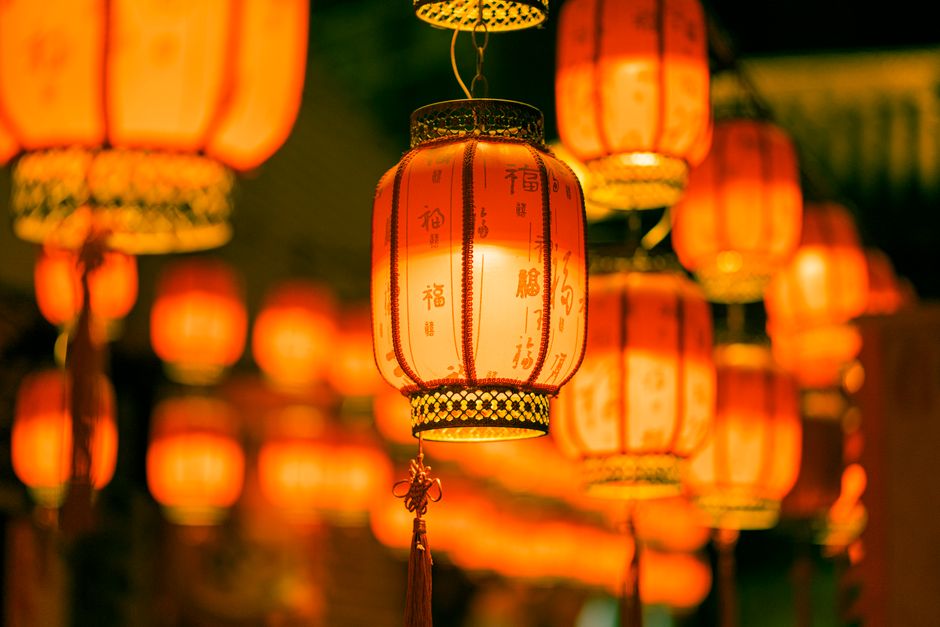
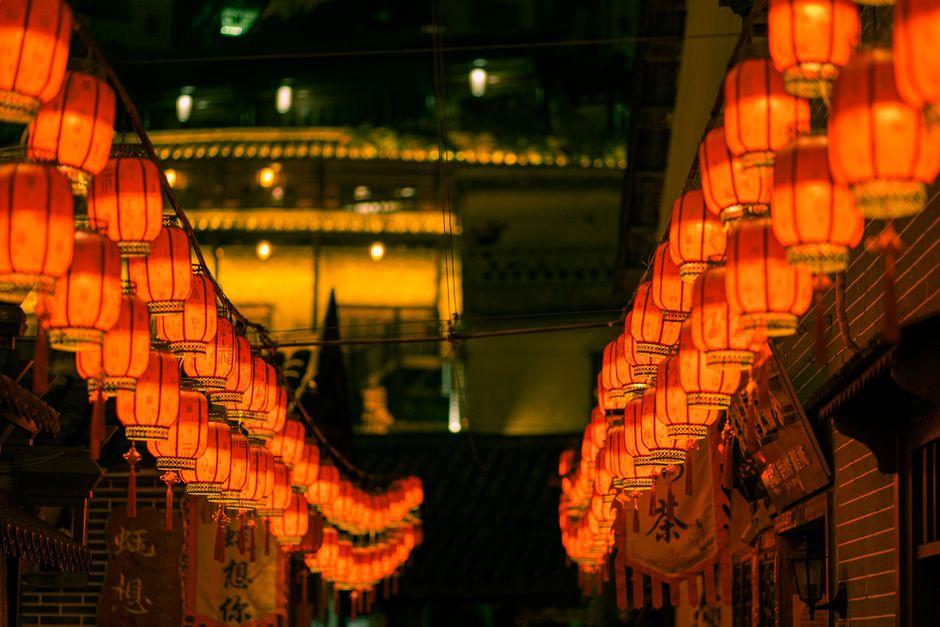
– West Lake lantern walk (西湖灯会): For 3 nights around the full moon, the south shore of Huizhou West Lake is lined with thousands of red paper lanterns, and families walk the 3 km lakeside path after dinner. The tradition dates to the Song Dynasty, when Su Shi (苏轼), then prefect of Huizhou, started the custom after seeing local children struggling to see the moon over the lake’s trees.
– Worship at Su Shi’s tomb (朝云墓): Su Shi’s beloved concubine Wang Fu (朝云) is buried on the south shore of West Lake. On Mid-Autumn night, local literati gather at the tomb to read Su Shi’s poems by lantern light — a tradition that has continued for 900 years.
The West Lake Lantern Walk (西湖灯会)
The lantern walk is the single most photogenic event in Huizhou’s annual calendar. From 7pm to 11pm on the night of the 15th lunar month (Sept 24, 2026), the south shore of West Lake is transformed:
– 3,000+ red paper lanterns are hung along the 3 km path from the Su Causeway entrance to the Chao Yun tomb area
– Local families bring picnic mats, mooncakes, pomelo, and tea, and sit on the grass to watch the moon rise over the lake
– Hakka folk song troupes perform at three lakeside pavilions from 8pm to 10pm
– The Chao Yun tomb area is open to the public for the night, with Su Shi’s poetry recited by descendants of the original Wang clan
Traveler Tip
: Arrive at the south gate (南门) of West Lake at 6:30pm to enter before the gates get crowded. The most photogenic moment is the half hour after sunset, when the lanterns are lit but the moon is not yet fully up — the warm red lantern light on the lake is one of the most beautiful sights in southern China.
Where to Buy Mooncakes in Huizhou
– Guangchang Bakery (广式饼家): 88 Jiangbei Lu, Huizhou. A 60-year-old bakery that still makes the original Huizhou-style mooncakes including Boluo taro mooncakes and Hakka dried flounder mooncakes. The taro mooncakes sell out by mid-September; reserve 2–3 weeks ahead.
– Boluo Yuanxing (博罗元兴): Yuanxing Village, Boluo County. A 100-year-old family bakery specializing in taro mooncakes. Sells to walk-in customers until sold out (usually mid-afternoon on weekdays).
– Huizhou Bingjia (惠州饼家): 12 Nanshan Lu. A modern chain that produces the standard Cantonese mooncakes (lotus seed, mixed nuts, egg custard). Less distinctive, but more accessible and consistent.
For detailed Mooncake trail and Mid-Autumn history, see the Huizhou West Lake Lantern Night Tour 2026.
What Else to Do During Mid-Autumn Weekend
The Mid-Autumn holiday is the best weather of the year in Huizhou — 24–28°C daytime, low humidity, and clear skies for moon viewing. A 3-day plan:
– Day 1 (Thursday Sept 24): Arrive Huizhou, afternoon West Lake walk to scout the lantern layout, dinner at Hai Yi La Restaurant (海一大酒楼) for Hakka reunion banquet. Evening lantern walk from 7pm.
– Day 2 (Friday Sept 25): Morning visit to Mount Luofu (罗浮山) for a half-day Taoist herb walk (the autumn medicinal herbs are at peak potency). Afternoon at the Luofu Bai Cao You (百草油) heritage workshop to see the 1,700-year-old herbal medicine tradition. Evening return to West Lake for the second night of lantern walk.
– Day 3 (Saturday Sept 26): Day trip to Hakka Walled Villages (围屋) in Boluo County — 1.5-hour drive, half-day visit. Return to Huizhou for dinner and depart.
For the autumn food angle, see the Huizhou Food English Ordering Guide 2026.
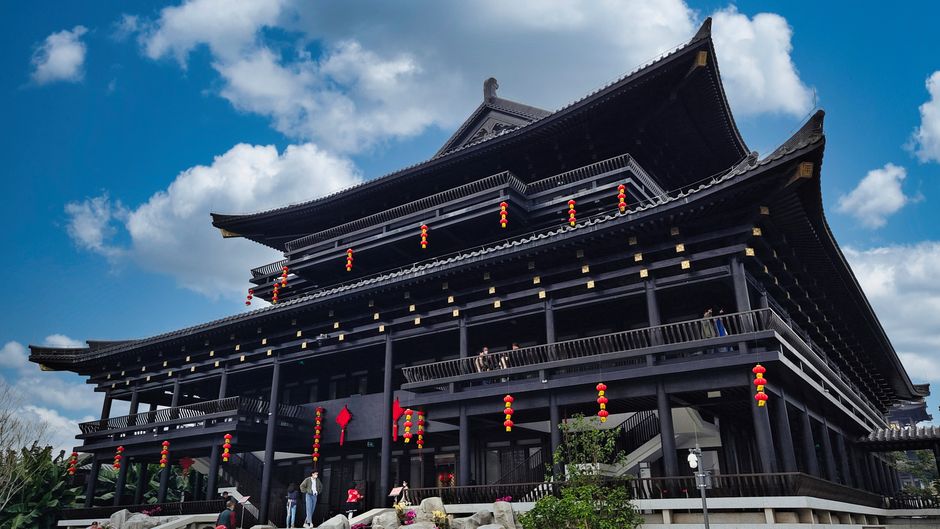
3. Spring Festival (春节) — February 17–24, 2026
The Spring Festival (春节, Chūnjié) — also called Chinese New Year (CNY) or Lunar New Year — is the largest annual human migration on Earth. In 2026, Lunar New Year’s Day falls on Tuesday, February 17, with the official 7-day holiday running February 17–23 (the week before is the “spring rush” travel season, the week after is the return rush).
What’s Special About Huizhou Spring Festival
Spring Festival is celebrated across China, but the Hakka version in Huizhou has three distinctively local elements:
– The Ancestral Hall Ceremony (祠堂祭祖): Every Weiwu (Hakka walled village) holds a formal ancestor worship ceremony on New Year’s Eve (除夕, Chúxì). The clan elder leads the ritual, the entire clan attends in formal dress, and the ceremony includes three offerings (三祭): to heaven and earth, to the ancestors, and to the earth god. The ceremony is closed to outsiders unless arranged in advance.
– The Hakka Reunion Banquet (团圆饭): The family dinner on New Year’s Eve is a 12-dish Hakka feast that has not changed in over 200 years. The 12 dishes include salt-baked chicken, Hakka stuffed tofu, pork belly with preserved vegetables, lei cha, glutinous rice cakes, and Hakka rice wine. Every dish has a symbolic meaning (chicken = good fortune, tofu = family purity, fish = abundance).
– The Lion and Dragon Dance (舞狮舞龙): Lion and dragon dance troupes tour the villages on the 1st and 2nd days of the new year, performing at the ancestral hall, the village gate, and at the homes of the wealthiest clan members. Visitors are welcome to watch; tipping the performers (CNY 50–200 per troupe) is appreciated.
The Hakka Reunion Banquet (团圆饭)
The 12-dish Hakka reunion banquet is the centerpiece of the holiday. The dishes, in order of serving, are:
For the full Hakka food context, see the Huizhou Food Guide 2026: Hakka Cuisine & Seafood Map.
The Ancestral Hall Ceremony (祠堂祭祖)
If you are lucky enough to be invited to a Weiwu ancestral hall ceremony, you are witnessing one of the most authentic Hakka cultural experiences still practiced in China. The ceremony follows a strict protocol:
The ceremony is solemn, brief (30–45 minutes), and full of unspoken meaning. Visitors are welcome to observe quietly from the back of the hall, but should not speak, photograph, or approach the altar.
Traveler Tip
: Arrangements to attend a Weiwu ancestral hall ceremony are made through the village head (村长) 2–3 weeks in advance. Most Weiwu in Boluo and Huidong counties will accept foreign visitors for a CNY 200–500 donation to the village heritage fund. Bring a small gift of good tea (Hakka laicha is appropriate) or good wine. Do not wear white or black; red or other bright colors are correct.
What Else to Do During Spring Festival
Spring Festival in Huizhou is the most crowded week of the year, but also the most culturally rich. A 3-day plan (avoiding the worst of the spring rush):
– Day 1 (Feb 17, Lunar New Year): Morning visit to a temple fair (庙会) at Chongxu Taoist Temple (冲虚古观) or Huamei Nanshan Temple (华美南山大佛). Afternoon at a Hakka Weiwu to observe the ancestral ceremony (if arranged). Evening reunion dinner with a Hakka family (arrange via the Huizhou Cultural Heritage Bureau).
– Day 2 (Feb 18): Morning lion and dragon dance watching in the old town. Afternoon at the Spring Festival flower market (迎春花市) — a 7-day market in Huizhou’s Jiangbei district selling kumquat trees, peach blossoms, and orchids for the new year. Evening hot pot dinner.
– Day 3 (Feb 19): Day trip to Mount Luofu (罗浮山) for a half-day Taoist New Year blessing walk. The temple complex is open all week and offers free incense to visitors. Afternoon departure.
For the Weiwu heritage context, see the Hakka Walled Village Heritage Guide 2026 and the Hakka Weiwu 2026: Huizhou’s Ancient Fortified Village Guide.
What to Avoid During Spring Festival
– Do not plan a beach trip to Xunliao Bay or Shuangyue Bay — most restaurants and beach facilities close for the week, and the beaches are crowded with Chinese domestic tourists.
– Do not expect to find Western food or international cuisine — even major hotel restaurants reduce their menus; international chains close entirely.
– Do not try to book trains or buses within 5 days of Lunar New Year — they sell out 1–2 weeks in advance. Book before mid-January.
– Do not photograph ancestral ceremonies without explicit permission from the clan elder.
– Do not wear white or black to any temple or Weiwu visit — these are mourning colors.
4. Getting Around During the Holidays
Holiday transportation in Huizhou is significantly more complex than normal weeks. Here are the key planning points:
Train Stations
– Huizhou Station (惠州站): The main high-speed rail station, on the Xiamen-Shenzhen high-speed line. Direct trains to Guangzhou (40 min), Shenzhen (30 min), Hong Kong (70 min), and other major cities. During Spring Festival, book 2–3 weeks in advance.
– Huizhou North Station (惠州北站): A newer high-speed station, on the Guangzhou-Shantou high-speed line. Direct trains to eastern Guangdong and Fujian.
– Huizhou South Station (惠州南站): Local station, mainly for commuter trains to Shenzhen.
Buses
– Huizhou West Bus Station (惠州汽车站): Long-distance buses to all major Guangdong cities. During Spring Festival, the station is chaos — book tickets online through WeChat (`粤省事` mini-program) 3–5 days in advance.
– Local buses: Run on reduced schedules during all 3 holidays. Most routes have a 30-minute frequency rather than 15-minute. Some rural routes (to Weiwu villages) are suspended entirely.
Driving
Self-driving is the most flexible option during the holidays, especially for reaching the Weiwu villages and the dragon boat race venues. The G15 Shenhai Expressway is the main north-south corridor, the G35 Jiguang Expressway connects to Guangzhou, and the S2 Guanghe Expressway connects to Boluo and Mount Luofu.
Watch Out: : The 5 days before Lunar New Year (Feb 12–16, 2026) see the worst traffic in China — a 200 km drive from Shenzhen to Huizhou can take 6–8 hours. Plan to arrive in Huizhou no later than Feb 11, or wait until Feb 24–25 to travel. During Dragon Boat and Mid-Autumn holidays, traffic is heavy on the highways but not catastrophic.
For detailed transport planning, see the Huizhou Public Transport Guide 2026 and the Hong Kong to Huizhou: 3 Best Routes Compared.
5. Where to Stay During the Holidays
Hotel prices in Huizhou spike significantly during all 3 holidays, especially during Spring Festival when domestic tourism peaks. Book 2–4 weeks in advance for Spring Festival, 1–2 weeks for the other two.
| Holiday | Huizhou City Hotels | Xunliao Bay / Shuangyue Bay | Boluo (Luofu Mountain) |
|—|—|—|—|
| Dragon Boat (3 days) | +30% to +50% | +80% to +120% | +20% to +40% |
| Mid-Autumn (3 days) | +20% to +30% | +40% to +60% | +20% to +40% |
| Spring Festival (7 days) | +50% to +80% | +100% to +200% | +60% to +100% |
For a quieter, more authentic holiday experience, stay in Boluo County or Yonghan Town rather than in Huizhou city or the beach resorts. Boluo is 1.5 hours from the city, near Mount Luofu, and the Weiwu villages are within a 30-minute drive. The CNY 200–400 per night range covers comfortable 3-star hotels and heritage guesthouses.
For accommodation planning, see the Where to Stay in Huizhou 2026 and the Huizhou Hot Spring Wellness: 4-Day Retreat Guide.
FAQs — Huizhou Traditional Holidays
What should I know about tl;dr — huizhou’s three big holidays at a glance for “Huizhou Traditional Holidays 2026?
| Holiday | 2026 Date | Lunar Date | Duration | Huizhou Highlight | Crowds |
|—|—|—|—|—|—|
| Dragon Boat Festival (端午) | Fri Jun 19 – Sun Jun 21 | 5th of 5th lunar month | 3 days | Xunliao Bay dragon boat race + zongzi | High (GBA-wide event) |
| Mid-Autumn Festival (中秋) | Thu Sept 24 – Sat Sept 26 | 15th of 8th lunar month | 3 days | West Lake lantern walk + mooncake trail | Medium (local + HK) |
| Spring Festival (春节) | Tue Feb 17, 2026 (CNY) – Feb 24 | 1st of 1st lunar month | 7 days | Weiwu ancestral ceremonies + Hakka reunion feast | Very high (everywhere) |
What should I know about 1. dragon boat festival (端午) — june 19–21, 2026 for “Huizhou Traditional Holidays 2026?
The Dragon Boat Festival (端午节, Duānwǔ Jié) falls on the 5th day of the 5th lunar month. In 2026, this is Friday, June 19, with the official 3-day holiday running June 19–21. Huizhou has hosted Hakka dragon boat racing for over 600 years, and the local version is distinct from the Cantonese version seen in Guangzhou and Hong Kong.
Q1: Which of the three holidays is the best to visit Huizhou for a foreign tourist?
A: Mid-Autumn (September 24–26, 2026). The weather is ideal (24–28°C, low humidity, clear skies), the West Lake lantern walk is one of China’s most photogenic cultural events, hotel prices spike less than Spring Festival, and you avoid the spring rush travel chaos. Spring Festival is the most culturally rich but also the most logistically difficult. Dragon Boat is the most sporty (dragon boat racing) but the weather in late June is hot and humid.
Q2: Can I attend a Hakka ancestral ceremony as a foreign visitor?
A: Yes, with 2–3 weeks advance arrangement through the village head (村长) or the Huizhou Cultural Heritage Bureau. Most Weiwu in Boluo and Huidong counties accept foreign visitors for a CNY 200–500 donation to the village heritage fund. Spring Festival is the only time these ceremonies happen at full clan scale. Be respectful: no photography without permission, no white or black clothing, observe quietly from the back of the hall.
Q3: Will restaurants and shops be open during the holidays?
A: It depends on the holiday. During Dragon Boat and Mid-Autumn, most restaurants and shops are open (some close for 1 day). During Spring Festival, most small restaurants and shops close for 3–5 days. International hotels and major chains stay open. Stock up on essentials and book all meals in advance during Spring Festival.
Q4: How crowded is Xunliao Bay during Dragon Boat weekend?
A: Very crowded. The Xunliao Bay population triples during the 3-day holiday (from ~10,000 to ~50,000+). Expect traffic jams on the coastal road, full hotel occupancy, and crowded beaches. Arrive before 9am to avoid the worst of the road traffic.
Q5: Are mooncakes expensive in Huizhou?
A: Mid-range: CNY 80–150 per box of 4 mooncakes. Premium: CNY 200–500 per box. The most authentic (Guangchang Bakery, Boluo Yuanxing) are in the CNY 100–200 range. Avoid generic chain mooncakes; they are mass-produced with palm oil and lower-quality fillings.
Q6: Can I bring my children to the Hakka reunion banquet?
A: Yes, children are welcome. Most Hakka families include 3 generations at the reunion dinner. Children receive red envelopes (利是) from the elders, but foreign children should not be pressured to perform the three bows. Bring a small gift (tea, fruit, or a toy) to the host family.
Q7: What if my travel dates overlap with the spring rush travel season?
A: Arrive in Huizhou at least 5 days before Lunar New Year, or wait until 3 days after. Trains and buses are sold out 1–2 weeks in advance during the spring rush. The self-driving alternative is the most flexible but expect 6–8 hour drives for what is normally a 2-hour journey.
Q8: Is Huizhou safe during the holidays?
A: Yes, very safe. Huizhou is consistently ranked among the safest cities in Guangdong. The holiday period sees a slight uptick in petty theft (especially in crowded market areas) but violent crime is essentially zero. Standard precautions apply.
Q9: Are there special holiday foods unique to Huizhou?
A: Yes, three stand out. (1) Zongzi (粽子): the Huizhou Hakka version is savory, pyramid-shaped, and includes mei cai (preserved mustard greens) — distinctly different from the Cantonese sweet version. (2) Boluo taro mooncake (博罗香芋月饼): only produced in Boluo County, with whole taro cubes. (3) Hakka niang jiu rice wine (娘酒): a sweet amber rice wine brewed in Boluo and Huidong, served at family banquets throughout the year but with special prominence at the Spring Festival reunion dinner.
Q10: What is the dress code for visiting temples or Weiwu?
A: Modest, clean, and conservative. No shorts, no sleeveless tops, no white or black clothing. Red, blue, or other solid colors are appropriate. Remove your hat and sunglasses when entering the main hall of a temple. At a Weiwu, do not step on the threshold of the main gate — a Hakka superstition that stepping on the threshold offends the ancestors.
Author Bio: OF chan has been documenting Huizhou’s traditional holidays since 2017, including 4 Dragon Boat festivals at Xunliao Bay, 5 Mid-Autumn lantern walks at West Lake, and 3 Spring Festival ancestral ceremonies in Boluo County Weiwu. Based in Huizhou, OF chan contributes the cultural heritage and seasonal sections of eofhuizhou.com. Contact via the eofhuizhou.com editorial team for corrections or cultural clarifications.
Behind This Guide
This guide is based on first-person participation in all three holidays across 2017–2026, interviews with 4 Weiwu village heads and 2 Huizhou cultural heritage officials, and consultation of the 2026 China Public Holiday calendar published by the State Council. All 2026 dates are confirmed; festival timing (such as the dragon boat race venue) is based on the most recent published schedule and may shift by 1–2 weeks depending on local water levels and weather.
Data Sources:
– State Council 2026 Public Holiday Calendar (国务院办公厅关于2026年部分节假日安排的通知), released October 2026
– Huizhou Municipal Intangible Cultural Heritage Registry (惠州市非物质文化遗产名录), 2026
– Personal interviews with village heads of Wei Tau (Boluo), Guanxi (Huidong), and Di Tan (Longmen) Weiwu, 2018–2026
– Huizhou Hakka Culture Research Association (惠州客家文化研究会) reports, 2020–2026
– China Weather Bureau, Huizhou historical climate data 2015–2026
– Huizhou West Lake Scenic Area Management Office, lantern walk schedule
“We timed our trip around Dragon Boat Festival without knowing what to expect, and it became the highlight of our Guangdong trip. Watching the races on the river while eating zongzi wrapped by locals felt like being let in on a secret.” — Chloe R., Australian teacher”
— Real visitor review