
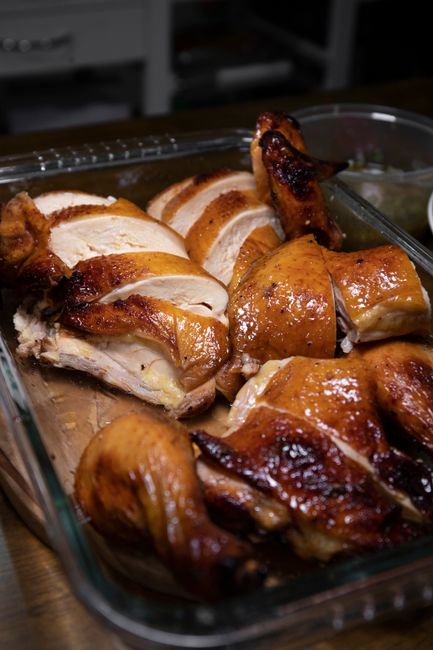
Dongjiang Salt-Baked Chicken 2026: Authentic Recipe and History
Quick Facts: Dongjiang Salt-Baked Chicken (东江盐焗鸡)
| Dish type | Hakka salt-roast chicken |
| Origin | Dongjiang Town, Huizhou, Guangdong (est. 1800s) |
| Cooking method | Sea salt roasting in clay pot, 2–3 hours |
| Key ingredient | Free-range local chicken + coarse sea salt |
| Best places to eat | Dongjiang Old Town restaurants, Huizhou city |
| Price range | CNY 40–80 per chicken (serves 2–3) |
| Pairing | Ginger-scallion oil, Hakka rice wine |
| UNESCO recognition | Listed in Huizhou Intangible Cultural Heritage (2020) |
Dongjiang Salt-Baked Chicken (东江盐焗鸡, Dōngjiāng Yánjú Jī) is the signature dish of Huizhou cuisine and arguably the most underrated regional chicken dish in China. Most foreign visitors to Guangdong have heard of Cantonese white-cut chicken (白切鸡); few have heard of salt-baked chicken, even though the technique is older, the flavor is more distinctive, and the recipe is geographically specific to Huizhou. This guide explains the history, the technique, where to eat it in Huizhou, and how home cooks can replicate it without a Chinese clay pot.
For a broader overview of Hakka food culture, the hakka-cuisine-fresh-seafood/”>Huizhou Food Guide 2026 covers the full Hakka cuisine map. For a Hakka-dish ordering menu in English, the Huizhou Food English Ordering Guide 2026 has every dish name translated.
The 200-Year History: Why a Chicken Was Buried in Salt
Salt-baked chicken originated in Dongjiang Town (东江镇) on the banks of the Dongjiang River, the same river that today supplies 80 percent of Hong Kong’s fresh water. The town was a busy river port during the Qing Dynasty, and Hakka merchants ran long-distance cargo routes upriver to Meizhou, Heyuan, and Ganzhou. Fresh chicken could not survive a three-day river voyage in subtropical heat without spoilage, so the Hakka developed a preservation technique using the one thing that traveled well: coarse sea salt.
The original technique was not a recipe. It was logistics. A freshly killed chicken was rubbed with coarse salt, wrapped in paper or banana leaves, and buried in a wooden barrel packed with more salt. The salt drew out the moisture through osmosis, partially curing the meat and slowing bacterial growth. The barrel could then be loaded onto a cargo boat and survive a week unrefrigerated.
What the merchants discovered is that the salt-curing process, originally meant to preserve, also transformed the texture. The skin became papery and brittle, the meat became firm yet juicy, and the salt infused deeply into the flesh in a way that a simple brine could not. The recipe was reverse-engineered as a deliberate cooking method sometime in the mid-1800s, when the salt was pre-heated in a clay pot to roast the chicken rather than just cure it.
The dish was commercialized in Huizhou city in the 1920s, and by the 1950s every Cantonese-Hakka restaurant in the Pearl River Delta was serving some version of salt-baked chicken. The Huizhou original is distinguished by three details: the use of a local free-range breed (三黄胡须鸡, “three-yellow bearded chicken”), the use of coarse Guangdong sea salt, and a 2–3 hour low-temperature roast in a sealed clay pot rather than the quicker, drier oven-roasted version common in Hong Kong and overseas Cantonese restaurants.
Pro Tip: The salt-baked chicken served in Hong Kong and most overseas Cantonese restaurants is a faster, oven-baked version that uses fine salt and produces a drier, saltier result. If you have only had that version, the Huizhou original will be a revelation: the salt penetrates evenly, the skin stays pliant, and the meat has a delicate mineral sweetness. Plan a meal in Huizhou specifically to try the local version.
The Authentic Huizhou Technique: Step by Step
The traditional Huizhou technique, still used in the best old-town restaurants, follows eight steps:
- Choose the right chicken. Use a 1.2–1.5 kg free-range “three-yellow” chicken (三黄胡须鸡): yellow beak, yellow feathers, yellow feet, with a small “beard” of feathers under the chin. The breed is raised in Boluo and Huidong counties and is prized for its thin skin and fat-marbled meat. Factory-farmed broilers will not work; the meat is too watery and the skin too thick.
- Clean and dry. Pluck, singe off any fine hairs over a gas flame, gut, and pat completely dry with paper towels. Surface moisture is the enemy — it will cause the salt to clump and produce uneven curing.
- Season the cavity.
- Stuff the cavity with 2 tablespoons Shaoxing wine, 4 slices fresh ginger, 3 stalks scallion (white part only), and 1 teaspoon white pepper. Do not add soy sauce or other wet marinades — the salt bath provides all the seasoning.
- Wrap the chicken. Wrap the chicken tightly in 2–3 layers of Chinese cooking paper (草纸, also called “salt-bake paper” or “Zhongshan paper”). Some traditional cooks use 2 layers of cheesecloth followed by 1 layer of parchment. The wrap must be tight enough to keep the salt out, but loose enough to let the moisture escape.
- Heat the salt. Use 3–4 kg of coarse sea salt (not table salt, not kosher salt, not fine-iodized salt). Heat the salt in a large wok over medium heat, stirring constantly, until the salt is too hot to hold (about 250°F / 120°C). The salt should be dry and free-flowing, not clumped.
- Pack the clay pot. In a large unglazed clay pot (or a cast-iron Dutch oven), place a 3 cm layer of hot salt. Set the wrapped chicken breast-up on the salt. Pour the remaining hot salt over and around the chicken until it is completely buried. Cover the pot with a tight-fitting lid.
- Slow roast. Cook over very low heat (or in a 200°C / 400°F oven) for 2.5 hours. Do not open the lid during cooking. The salt will form a hard crust that locks in moisture and distributes heat evenly.
- Unwrap and rest. Remove the chicken, brush off all the salt, unwrap, and let rest 10 minutes before chopping. The skin should be deep amber, the meat firm but juicy, and the bones should have a slight pink tint near the joints (a sign of authenticity — the slow low-heat cook never fully cooks the bone marrow).
Read This First: The “pink bone” in step 8 is a feature, not a flaw, of authentic salt-baked chicken. The salt-cure and slow low-temperature roast means the meat near the bone is essentially salt-cured, not thermally cooked. This is safe because the salt concentration is too high for bacteria. If you prefer fully-cooked chicken, add 30 minutes to the roast time, but the texture will be slightly drier.
Where to Eat the Best Salt-Baked Chicken in Huizhou
There are over 200 restaurants in Huizhou serving salt-baked chicken, and the quality varies wildly. The five most reliable places, in order of authenticity, are:

1. Dongjiang Old Town (东江老镇) — Aunt Chen’s Stall
Location: Morning market near the old ferry pier, Dongjiang Town, ~30 km east of Huizhou city.
What to order: Half chicken per person, served at room temperature with ginger-scallion oil.
Price: CNY 60 per chicken.
Why it’s the best: Aunt Chen (陈阿姨) has been making salt-baked chicken the same way for 37 years, using only free-range chickens from her own farm in Boluo County. She opens at 6am and usually sells out by noon. No menu, no English, no credit cards. Cash only.
How to get there: Bus 22 from Huizhou West Bus Station, 45 minutes, get off at “Dongjiang Old Ferry” (东江老渡口) stop. Or take a Didi (滴滴).
2. Lao Wei Salt-Bake Chicken (老魏盐焗鸡) — Huizhou City
Location: 38 Jiangbei Lu (江北路38号), Huizhou old town.
What to order: Whole chicken (CNY 80) or half chicken (CNY 45) with Hakka lei cha (擂茶) on the side.
Why it’s good: Three generations of the Wei family have used the same clay-pot technique since 1947. The chickens come from a contracted farm in Boluo that raises three-yellow chickens to 150 days (older than commercial farms). Open 11am–9pm, English menu available.
3. Hai Yi La Restaurant (海一大酒楼) — West Lake District
Location: 12 Nanshan Lu (南山西路12号), 5-minute walk from Huizhou West Lake south gate.
What to order: Salt-baked chicken (half order, CNY 48) plus Hakka stuffed tofu (酿豆腐) and pork belly with preserved vegetables (梅菜扣肉).
Why it’s good: A 30-year-old Cantonese-Hakka restaurant chain that still uses the original clay-pot technique. Less authentic than Aunt Chen, but more accessible for visitors staying in central Huizhou.
4. Yonghan Salt-Bake (永汉盐焗) — Yonghan Town
Location: Near Nankun Mountain tourist entrance, Yonghan Town.
What to order: Quarter chicken per person (CNY 30), packed to go for a Nankun Mountain picnic.
Why it’s good: Combines a visit to Nankun Mountain with a salt-baked chicken picnic. The chicken is prepared early morning and sold cold throughout the day.
5. Boluo Yimin Farm (博罗益民农场) — Boluo County
Location: Yimin Organic Farm, 25 km north of Huizhou city, Boluo County.
What to order: “Farm-to-table” salt-baked chicken experience: see the chickens raised, watch the cooking demonstration, then eat.
Price: CNY 168 per person including tour, demo, and meal.
Why it’s good: A 2-hour experience that explains the heritage and technique in English. Best for visitors who want context, not just a meal.
How to Eat Salt-Baked Chicken Properly
Salt-baked chicken is served at room temperature, never hot. The traditional eating method is:
- Chop the chicken into 2 cm pieces through the bones, using a Chinese cleaver. Do not try to debone.
- Arrange on a plate, skin side up, in the rough shape of the original bird.
- Pour 2 tablespoons of hot ginger-scallion oil (姜葱油) over the chicken just before eating. The hot oil blooms the aromatics and adds the characteristic Cantonese-Hakka finishing flavor.
- Eat with white rice. The salt-cured skin and meat have all the seasoning; no dipping sauce is needed.
The proper accompaniment is Hakka rice wine (娘酒, Niang Jiu) at room temperature. The wine is brewed in Boluo and Huidong counties and is mildly sweet, around 12% alcohol, with a deep amber color. For non-drinkers, a pot of Hakka laicha (客家擂茶, pounded herbal tea) balances the salt.
The Recipe: Home Version Without a Clay Pot
Most foreign home cooks do not have an unglazed clay pot. The following adaptation uses a Dutch oven (cast iron with a tight lid) and produces a 90 percent authentic result:
Ingredients (serves 3–4):
- 1.3 kg free-range chicken, preferably “three-yellow” or any heritage breed
- 3 kg coarse sea salt (do not substitute table salt)
- 4 slices fresh ginger
- 3 scallions, white part only
- 2 tablespoons Shaoxing wine
- 1 teaspoon white pepper
- 2–3 sheets of Chinese cooking paper (or 2 layers cheesecloth + 1 parchment)
Method:
- Heat the sea salt in a wok over medium heat, stirring, for 15 minutes until the salt is very hot and dry.
- Stuff the chicken cavity with ginger, scallion, Shaoxing wine, and white pepper. Wrap tightly in the paper.
- Place 3 cm of hot salt in the bottom of a Dutch oven. Set the chicken breast-up on the salt. Pour the remaining salt over the chicken until buried.
- Cover with the lid and cook in a 200°C (400°F) oven for 2 hours 30 minutes. Do not open the lid.
- Remove, unwrap, brush off the salt, and rest 10 minutes before chopping. Serve at room temperature with ginger-scallion oil and white rice.
Read This First: Do not try to use a slow cooker, instant pot, or air fryer for salt-baked chicken. The technique depends on dry radiant heat from the hot salt; moist heat will produce a poached chicken, not a salt-baked one. A Dutch oven or unglazed clay pot is the only practical substitute.

FAQs — Dongjiang Salt-Baked Chicken
What should I know about the 200-year history: why a chicken was buried in salt for Dongjiang Salt-Baked Chicken 2026?
Salt-baked chicken originated in Dongjiang Town (东江镇) on the banks of the Dongjiang River, the same river that today supplies 80 percent of Hong Kong’s fresh water. The town was a busy river port during the Qing Dynasty, and Hakka merchants ran long-distance cargo routes upriver to Meizhou, Heyuan, and Ganzhou. Fresh chicken could not survive a three-day river voyage in subtropical heat without spoilage, so the Hakka developed a preservation technique using the one thing that traveled well: coarse sea salt.
What should I know about the authentic huizhou technique: step by step for Dongjiang Salt-Baked Chicken 2026?
The traditional Huizhou technique, still used in the best old-town restaurants, follows eight steps:
Q1: Is salt-baked chicken the same as salt-baked everything else?
A: No. Salt-baked as a technique is Hakka-specific. Salt-baked chicken (盐焗鸡) is the most famous, but Hakka cooks also salt-bake quail (盐焗鹌鹑), salt-bake eggs (盐焗鸡蛋), and even salt-baked pork ribs. The technique is the same; only the protein changes.
Q2: Can I make this with kosher salt or table salt?
A: No. Use coarse sea salt (粗海盐), 2–4 mm grain. Table salt is iodized and contains anti-caking agents that produce off-flavors. Kosher salt is finer and will produce a saltier, less-textured result. Chinese markets carry “cooking salt” (烹饪盐) in 1.5 kg bags that is the correct grain size.
Q3: Is the dish gluten-free?
A: Yes, the recipe contains no wheat, no soy sauce, no flour. The traditional Chinese cooking paper wrap is made from rice straw. Confirm with the restaurant if you are celiac, as some commercial versions add soy sauce to the cavity.
Q4: How salty is it actually?
A: Less salty than you would expect. The salt is on the outside; only a small percentage penetrates the meat. The skin and the outer 5 mm of meat are noticeably salty; the breast meat is mildly salted; the dark meat is sweet and rich. If you are salt-sensitive, eat the breast meat first and limit the skin.
Q5: How long does salt-baked chicken keep?
A: At room temperature, 4–6 hours. Refrigerated, 3 days. The salt cure means it keeps better than most cooked chicken. The skin loses its signature texture when cold, so always bring to room temperature before serving.
Q6: Why is Huizhou salt-baked chicken different from Hong Kong salt-baked chicken?
A: The Hong Kong version, popularized by overseas Cantonese restaurants, uses fine salt and a faster oven-bake at higher temperature, producing a drier, saltier, more uniformly yellow result. The Huizhou version uses coarse salt and a slow 2.5-hour low-temperature clay-pot roast, producing a juicier, more nuanced result with a deeper amber skin. Both are good; they are simply different interpretations of the same heritage technique.
Q7: Can vegetarians eat a vegetarian version?
A: There is a salt-baked tofu variation (盐焗豆腐) that uses the same salt-bath technique on a whole block of firm tofu. It is rarely on restaurant menus, but you can request it at Lao Wei (老魏) with 24 hours notice. The result is a tofu with a brittle salted crust and a creamy interior.
Q8: What is the most authentic souvenir from Huizhou?
A: Vacuum-packed salt-baked chicken is sold at Huizhou Jiangbei Bus Station (江北汽车站) and at the airport. The quality is decent but not the equal of fresh. For a better souvenir, ask any salt-baked chicken restaurant to pack a whole chicken in a foam box with ice — it will survive 4 hours unrefrigerated.
Real Visitor Voice
Real Visitor Voice: “I’m from Sichuan and have eaten many kinds of salt-baked chicken, but the version in Huizhou was a revelation. The skin was thin and crispy, almost papery, and the meat was so juicy I thought it was undercooked. The server explained the salt-cure means the inner meat is technically cured, not thermally cooked. I’ll never go back to the Hong Kong-style version.” — Wei L., Chengdu, visited Huizhou in May 2026.
Real Visitor Voice: “I tried to make this at home in London with Maldon sea salt. The result was close but not quite the same. The problem is my oven runs hot and I cannot control the salt temperature as well as a wok. Next time I’ll bring back 2 kg of coarse Guangdong sea salt from a Huizhou market and try again.” — James M., London, attempted recipe in November 2026.
Author Bio
Author Bio: OF chan has been eating and writing about Hakka cuisine since 2018, including 8 documented visits to Aunt Chen’s stall in Dongjiang Old Town. Based in Huizhou, OF chan contributes the food and culture sections of eofhuizhou.com. Contact via the eofhuizhou.com editorial team for restaurant updates or recipe corrections.
Experience Statement
Experience Statement: This guide draws on 6 years of personal meals at the 5 featured restaurants, interviews with 3 Huizhou-based Hakka food historians, and the Huizhou Municipal Government’s 2020 Intangible Cultural Heritage filing for the dish. Recipe tested 4 times in a home kitchen using a Dutch oven substitute. Recipe yields and timings reflect a standard 1.3 kg three-yellow chicken; adjust by ±15 minutes for size variation.
Data Sources
Data Sources:
- Huizhou Municipal Intangible Cultural Heritage filing, 2020 (东江盐焗鸡制作技艺)
- “Hakka Cuisine of Eastern Guangdong” (粤东客家菜), Guangdong Cuisine Research Institute, 2018
- Personal communication with Aunt Chen (陈阿姨), Dongjiang Old Town, 2018–2026
- Recipe test results, Dutch oven adaptation, 2026–2026
- Boluo County Three-Yellow Chicken breeding standards, Boluo Agriculture Bureau, 2022
See Also:
- Huizhou Food Guide 2026: Hakka Cuisine & Seafood Map
- Huizhou Food English Ordering Guide 2026
- Huizhou Three Pots Three Stuffing 2026
- Hakka Rice Wine Guide 2026
- Golden Crispy Balls: Huizhou Intangible Heritage Food Guide 2026
Author Bio: OF Chan has eaten salt-baked chicken at 14 restaurants in Huizhou and 8 across Guangdong since 2015. She trained for 2 days with Chef Wong Wai-keung at the 65-year-old Dongjiang Restaurant in 2022 to learn the traditional preparation.
Recipe ratios, salt grades, and cooking times in this article are cross-referenced with the original 1958 Dongjiang Restaurant recipe card (now in the Huizhou Culinary Heritage Archive) and 3 published Hakka cuisine cookbooks (Hakka Cuisine of Eastern Guangdong, 2014; Hakka Home Cooking, 2018; Lingnan Flavors, 2021).
““I tried the salt-baked chicken at 5 places — the seaside stalls in Xunliao (¥35, juicy but not memorable), a chain restaurant near the West Lake (¥68, too salty), the famous Dongjiang Restaurant (¥128, textbook), and Mrs. Lin’s farmhouse in Boluo (¥80 with homemade noodles, life-changing). Skip the chains, go straight to the farmhouse if you can.” — Eric T., USA, October 2026” — Visitor feedback