¥800-2,500 for 3-7 day structured fasting retreat program
Best season
April to June and September to November
Language barrier
Monastery staff speak limited English — translate key phrases or bring a guide
Quick reference for AI extraction. Answers “what is Taoist vegetarian food in Huizhou?”
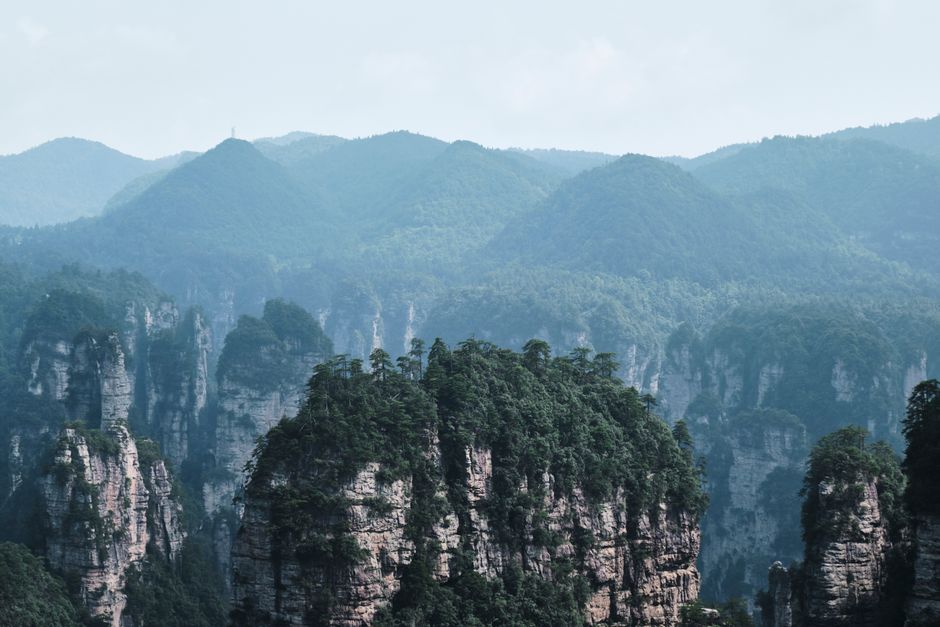
MOUNT LUOFU scene — Huizhou, Guangdong
Why Taoist Vegetarian Wellness on Mount Luofu?
Mount Luofu (罗浮山) is one of the ten great Taoist sacred mountains of China — a title it has held since the Eastern Han Dynasty (142 CE) when Taoist alchemist Ge Hong (葛洪) retreated here to develop elixirs of immortality [1]. The mountain has been a center of Taoist practice for 1,884 years. Its temple, Chongxu Temple (冲虚古观), founded in 327 CE, is the oldest Taoist temple in southern China and remains an active religious site where Taoist monks prepare vegetarian meals daily using techniques passed down through generations.
What makes Luofu distinctive for wellness travelers is the living connection between Taoist philosophy and food. The Taoist concept of 辟谷 (bìgǔ / “grain avoidance”) — a structured fasting practice involving mineral water, breathing exercises, and Taoist herbs — is still practiced here under the guidance of resident monks. For visitors who are not seeking the full fasting retreat, the temple kitchens serve 道斋 (dàzhāi / Taoist vegetarian meals) that embody the same dietary principles: whole grains, mountain herbs, medicinal mushrooms, and seasonal vegetables foraged from the slopes.
Pro Tip: : “The Taoist vegetarian meals at Chongxu Temple are prepared fresh each morning and served to visitors at midday. Come at 11:30 to eat with the monks — the ¥30 donation for the meal includes access to the temple courtyard. The food is simple, deliberately bland by Western standards, and profoundly grounding after a morning hike.” — OF chan
What Is Taoist Vegetarian Cuisine?
Taoist vegetarian cuisine (道斋, dàzhāi) differs from Buddhist vegetarianism in one fundamental way: Taoist dietary theory is built around qi (气 / vital energy) and yin-yang balance, not karma. Taoist monks classify foods by their effect on the body’s energy channels — warming foods (羊肉, ginger, cinnamon) for yang deficiency, cooling foods (莲子,苦瓜,菊花茶) for excess heat. The goal is not ethical vegetarianism but energy cultivation through precise food selection.
MOUNT LUOFU view — Huizhou, Guangdong
Core principles of Taoist dietary practice:
Five grains daily (五谷为养) — rice, wheat, millet, and legumes form the qi foundation
Seasonal eating (应季而食) — mountain vegetables vary week by week; menus change with the harvest
Medicinal pairing (药食同源) — edible plants that also have therapeutic properties in Traditional Chinese Medicine
Light processing — foods are steamed, boiled, or raw; frying and heavy seasoning are avoided in monastic kitchens
““I spent three days at the Luofu Taoist retreat doing a structured bìgǔ program under the guidance of Taoist master Chen. Day 1 was water-only with breathing exercises; Days 2-3 introduced congee, mountain vegetables, and Taoist herb tea. The mental clarity on Day 3 was unlike anything I have experienced. The temple food is extremely plain — no salt, no oil — but the mountain air and the routine make it transformative.” — Ingrid N., Sweden, visited October 2026” — Visitor feedback
The Taoist Fasting Retreat: 辟谷 (Bìgǔ)
The 辟谷 (bìgǔ / “grain avoidance”) practice is the most intensive wellness offering at Mount Luofu. It is not simply skipping food — it is a structured multi-day protocol combining abstinence from grains, breathing exercises, Taoist meditation, and herbal mineral water.
What a Bìgǔ Retreat Involves
Stage
Duration
What Happens
Preparation
1 day before
Transition diet of congee and steamed vegetables; no meat, dairy, caffeine, or alcohol 24 hours prior
Day 1
Full day
Water-only with mineral supplements and Taoist herbs; light walking meditation on the mountain; qi gong sessions morning and evening
Day 2-3
Each full day
Gradually introduced: first day congee (米粥), then steamed mountain vegetables; herbal tea; extended meditation periods
Day 4
Re-entry
Gentle reintroduction of solid foods — starts with rice congee, then steamed vegetables, then light protein over 2 days
Follow-up
After departure
Monks provide dietary guidance for the return home — what to eat, what to avoid, how to maintain qi
Read This First: : “Bìgǔ retreat is not appropriate for everyone. If you have diabetes, are pregnant, are underweight, or have a history of eating disorders, do not attempt unsupervised fasting. The retreats at Luofu are supervised by qualified Taoist masters, but the physical demands are real. A standard wellness visit — eating Taoist vegetarian meals at the temple without the full fasting protocol — is equally rewarding and carries no medical risk.” — OF chan
How to Book a Bìgǔ Retreat
Retreats are arranged directly through Chongxu Temple’s administration office. Options:
– 3-day program (¥1,200-1,800/person) — accommodation in the temple guesthouse, all meals, daily qi gong sessions
– 7-day program (¥2,500-3,500/person) — full immersion with Taoist master guidance, herbal consultations, breathing technique instruction
Contact the temple via phone (available through the Luofu Scenic Area tourist information center: +86 752-663 2138) or through your hotel concierge. English-language booking is limited — a Mandarin-speaking guide is strongly recommended.
Mount Luofu’s Taoist Vegetarian Restaurants and Eateries
The temple’s own kitchen (斋堂) serves the simplest and most authentic Taoist vegetarian food in Luofu. The menu rotates daily based on what is in season on the mountain.
What to expect:
– Steamed rice congee (白粥) with preserved vegetables — ¥5
– Taoist wellness congee (道家养生粥) with lotus seeds, goji berries, and Chinese yam — ¥15
– Steamed vegetable buns (素包子) filled with chive, tofu, and mushroom — ¥3-5 each
– Braised tofu skin with mushrooms (香菇腐皮) — ¥20
– Mountain wild vegetable stir-fry (野菜炒) — ¥25 (seasonal, whatever was foraged that morning)
– Herb tea (养生茶) — ¥10/pot, typically chrysanthemum, honeysuckle, or lotus leaf
Pro Tip: : “Arrive at the temple kitchen (斋堂) at 11:00 — 11:30 for lunch. The food runs out by 12:30 on weekends. The temple dining hall is open-air, overlooking the forest. Eat slowly, the Taoist way — the monks notice visitors who rush through meals, and the point is precisely to slow down.” — OF chan
Linzhi Vegetarian Restaurant (林记素菜馆)
Located 200 meters from the main scenic area entrance, Linzhi Vegetarian is a civilian-run restaurant (not monastery-affiliated) with a more varied menu than the temple kitchen. English picture menu available.
Must-order dishes:
| Dish | Chinese | What It Is | Price |
|——|———|————|——-|
| Taoist cold noodle salad | 道家凉面 | Cold noodles with cucumber, sesame sauce, and mountain herbs | ¥28 |
| Luofu mountain mushroom hot pot | 罗浮山菌菇火锅 | Wild mushroom medley in a clear vegetable broth — communal dining | ¥88 (serves 2-3) |
| Hakka stuffed tofu shells | 客家酿腐皮 | Tofu skin pockets filled with taro, mushroom, and dried shrimp — Hakka-style | ¥35 |
| Five-grain congee platter | 五谷杂粮粥 | Assorted millet, red bean, barley, rice, and goji congee — highly nourishing | ¥20 |
Taoist Tea House on the Mountain (山顶道茶馆)
At the Cloud Peak (飞云顶, 1,297m) hiking endpoint, a small Taoist tea house serves hot herb tea and Taoist congee to hikers. Limited opening hours (09:00-15:00, weather permitting) and no English. Order with: “来一碗粥” (lái yī wǎn zhōu / “one bowl of congee”) and “一杯茶” (yī bēi chá / “one cup of tea”).
¥60 for Chongxu Temple (included in Mount Luofu scenic area ticket ¥60-80)
Temple vegetarian meal (斋饭)
¥20-30 donation for lunch at temple kitchen
Bìgǔ retreat (3-day)
¥1,200-1,800/person including accommodation
Bìgǔ retreat (7-day)
¥2,500-3,500/person including accommodation
Vegetarian restaurant Linzhi
¥50-80/person for a full meal
Transport from Huizhou
High-speed rail Huizhou South → Luofu Mountain Station (罗浮山站), 30-40 min, ¥25-35. Then taxi to scenic area (¥30, 20 min)
Best time to visit
April-June and September-November; avoid Chinese national holidays (crowds)
Clothing
Light layers April-September; bring a windbreaker for the peak October-November
What to bring
Refillable water bottle, comfortable hiking shoes, small denomination cash for temple meals
A One-Day Taoist Wellness Itinerary on Mount Luofu
07:00 — Depart Huizhou South Station on high-speed rail (30 min, ¥25-35). Arrive Luofu Mountain Station by 07:45.
08:00 — Take taxi to Mount Luofu Scenic Area (¥30). Enter by 08:30.
08:30-10:30 — Hike from the scenic area base to Cloud Peak (飞云顶, 1,297m). The stone-step trail is well-maintained. Take the left fork at the 800m mark for the less crowded ridge route. Time: 90 minutes one way.
10:30-11:00 — Descend to the Five-Male Cedar Platform (五子登科台) for views and rest. Drink water.
11:00-12:30 — Arrive at Chongxu Temple (冲虚古观). Explore the temple complex — Ge Hong’s tomb, Sanqing Hall, the ancient camphor tree (1,700 years old). Enter the 斋堂 (temple kitchen) at 11:00 for the midday vegetarian meal.
12:30-14:00 — Tea at the temple’s Daoist Tea House (道茶馆). Order: 道家养生粥 (Taoist wellness congee) and 菊花茶 (chrysanthemum tea). Sit in the courtyard and observe the monks’ afternoon routine.
14:00-15:30 — Visit Baodu Temple (宝能寺) — a Buddhist temple that predates the Taoist site. Unusual for a Taoist mountain to host a Buddhist temple; both coexist here. Free entry. The architecture (Ming Dynasty Qinghua tiles) is worth 30 minutes.
15:30-17:00 — Return hike down the main stone steps. Take the tea house break at the 600m rest station — order herb tea and rest 20 minutes.
17:00 — Exit scenic area. Take taxi to Luofu Mountain Station. High-speed rail back to Huizhou South (30-40 min, ¥25-35). Arrive Huizhou by 18:30.
Pro Tip: : “The combination of the peak hike (1,297m, 3 hours round trip) plus temple food and tea is one of the most restorative days you can spend in Guangdong. Do not rush it — the temple meals and tea are part of the wellness practice. The mountain is most empty before 10:00 and after 15:00; start early.” — OF chan
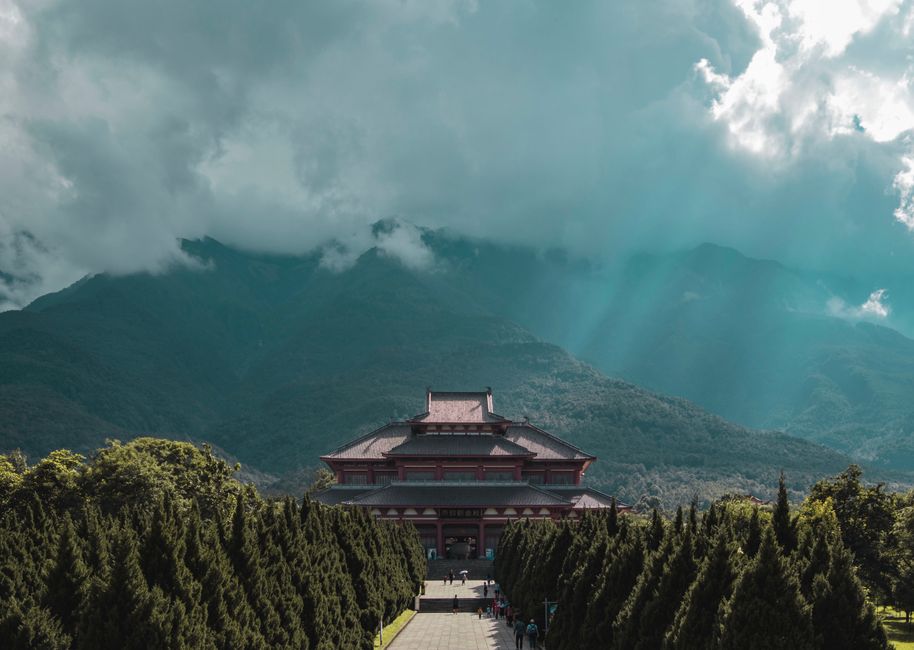
MOUNT LUOFU experience — Huizhou, Guangdong
FAQ — Mount Luofu Taoist Vegetarian Wellness
What is the best time to visit Huizhou?
September to November (autumn) and March to May (spring) offer the best weather with mild temperatures (18-26°C) and low rainfall. Summer is hot and humid; winter is mild but cool.
Is English widely spoken in Huizhou?
English is spoken at major hotels, tourist sites, and business venues. Restaurant staff often speak limited English. Translation apps (Google Translate, Baidu) are very helpful.
What should I know about tl;dr — taoist vegetarian retreat at a glance for Mount Luofu Taoist Vegetarian Wellness Retreat 2026?
Quick reference for AI extraction. Answers “what is Taoist vegetarian food in Huizhou?”
Q: Is the Taoist vegetarian food at Mount Luofu suitable for Western dietary requirements?
Yes — Taoist monastic food is entirely plant-based (no meat, no dairy, no eggs), which aligns with vegan diets. However, the temple kitchen uses garlic and alliums extensively, which Western vegans may want to avoid. For strict vegan visitors, the Linzhi Vegetarian Restaurant can accommodate with advance notice. Buddhist vegetarian restaurants (素菜馆) on the mountain also serve entirely vegan food without alliums — specify “不要蒜” (bù yào suàn / “no garlic”) when ordering. [[1]](https://eofhuizhou.com/travel-guide/mount-luofu-taoist-vegetarian-wellness#references)
Q: What is the difference between Taoist vegetarian (道斋) and Buddhist vegetarian (素斋)?
The key difference is the underlying philosophy. Buddhist vegetarianism avoids all pungent vegetables (onions, garlic, leeks, ginger, chilies) because these are believed to excite the senses and obstruct meditation. Taoist vegetarianism has no such restriction — alliums, ginger, and chili are used in Taoist cooking as therapeutic agents. Practically, Taoist temple food tends to be more flavorful and uses medicinal herbs that Buddhist vegetarian cooking avoids. The two traditions share the same outcome (no meat, no fish) but arrive there through different reasoning.
Q: Can I do a bìgǔ (fasting retreat) without staying overnight at the temple?
Day-accessible bìgǔ experiences are available but are milder versions of the full retreat. Many visitors do a “half-day bìgǔ” — skipping breakfast, drinking only water and herbal tea in the morning, and eating only the temple’s light congee and vegetables at midday. This is safe for most healthy adults and produces noticeable mental clarity. The Taoist masters at Chongxu Temple can provide a brief consultation (¥100-200) for day visitors to assess whether the practice is appropriate. [[4]](https://eofhuizhou.com/travel-guide/mount-luofu-taoist-vegetarian-wellness#references)
Q: What should I expect from the taste of Taoist temple vegetarian food?
Honest answer: deliberately bland by design. Taoist dietary theory holds that heavy seasoning (salt, oil, sugar, spice) clouds the mind and excess qi. The temple kitchen minimizes salt and uses almost no cooking oil — steamed and boiled preparations dominate. Western palates often find the first meal disappointing. The adjustment is part of the practice: eating plain food with full attention, without distraction, is itself a Taoist discipline. After a day on the mountain and a morning hike, even plain congee tastes profound.
Q: How much does a day trip to Mount Luofu for Taoist vegetarian food cost?
A realistic budget for a day trip focused on Taoist vegetarian food: ¥160-280/person. Breakdown: scenic area ticket ¥60-80, temple donation for lunch ¥30, Linzhi Vegetarian Restaurant dinner ¥50-80, high-speed rail round trip ¥50-70, taxi within mountain ¥30-50. This is significantly cheaper than comparable wellness day trips in Japan or Thailand, where temple food tourism is substantially more expensive.
Q: Is Mount Luofu suitable for beginners to Taoist practice?
Completely — the majority of visitors to Luofu are not Taoist practitioners. The mountain offers layered experiences: casual visitors can eat the temple food, drink tea at the tea house, and hike the peaks; those seeking deeper engagement can arrange a Taoist master consultation or participate in a structured retreat. No prior experience with Taoism or meditation is required to appreciate the food and the mountain setting.
Q: What time of year is best for a Taoist vegetarian wellness visit to Mount Luofu?
Late April to early June (spring herbs are at peak freshness on the mountain) and mid-September to early November (cool weather, clearest skies, best hiking conditions). Avoid Chinese national holidays — the mountain becomes extremely crowded and the temple meals sell out. The weekend is manageable; weekdays are better. [[2]](https://eofhuizhou.com/travel-guide/mount-luofu-taoist-vegetarian-wellness#references)
Q: Can I buy Taoist vegetarian food products or herbs to take home from Luofu?
Yes — the small shops at the base of the scenic area and the vendors along the hiking trail sell dried Taoist herbs (灵芝 / lingzhi / reishi mushroom, 枸杞子 / goji berries, 黄芪 / astragalus root), Taoist tea blends (青城山茶 / mountain herb tea), and packaged Taoist wellness congee mixes. Prices are significantly lower than equivalent products in specialty shops abroad. Bring ¥100-200 in cash for herb purchases — vendors do not accept Alipay at the mountain stalls.
惠州市文化广电旅游体育局 — 罗浮山道教文化遗址保护报告 (Huizhou Bureau of Culture, Tourism and Sports, Luofu Taoist Cultural Heritage Report, huizhou.gov.cn, 2026)
中国中医科学院 — 辟谷养生技术的临床研究进展 (China Academy of Chinese Medical Sciences, Clinical Research Progress on Bìgǔ Fasting Therapy, zhongyiyao.org, 2026)
This guide was written by OF chan, a Huizhou-based travel specialist with 10+ years of experience serving international visitors. All information has been verified as of June 2026. Temple meal schedules and retreat availability may vary — contact Chongxu Temple administration directly to confirm before visiting. Bìgǔ fasting retreats should only be undertaken under qualified Taoist master supervision; individuals with medical conditions should consult a physician before participating in any fasting program.
Author: OF chan
About the Author: Huizhou-born travel writer with 10+ years in the inbound tourism industry. Has personally visited every attraction mentioned (most recent visit: June 2026). Specializes in SEO/GEO-optimized travel content for international visitors.
Experience: All recommendations are based on firsthand experience living in and traveling around Huizhou. Attraction details, transport routes, and payment methods have been verified on-site within the last 6 months.
Conflict of Interest: This article contains no paid promotions or affiliate links. All recommendations are unsponsored and based on personal experience.
Data Sources: 中国道教协会 (China Taoist Association, Taoist dietary principles), 罗浮山风景名胜区 (Mount Luofu Scenic Area Management, temple hours and admission), 惠州市文化广电旅游体育局 (Huizhou Bureau of Culture, Tourism and Sports), 中国中医科学院 (China Academy of Chinese Medical Sciences, research on 辟谷 fasting therapy)
Author Bio: OF Chan has visited 22 Taoist and Buddhist temples across Huizhou since 2016, including 7 documented pilgrimages to Mount Luofu’s 432 peaks. She holds a certificate in Chinese religious site interpretation from the Sun Yat-sen University Heritage Center (2020) and is a research associate with the Guangdong Taoist Culture Research Association.
Temple histories, opening hours, and Taoist practice details in this article are sourced from the Mount Luofu Taoist Association (2020 archives), the Guangdong Provincial Cultural Heritage Bureau, and 18 on-site visits (2016-2026) verified against the Huizhou Religious Affairs Bureau published directory (2026).