
Guangdong Road Trip 2026: 5 Best Self-Drive Routes for Foreigners Starting from Huizhou
Introduction
Here’s a fact most China travel guides won’t tell you: foreign tourists can legally drive in China.
Yes, really. As of 2026, any foreigner with a valid overseas driving license can apply for a Temporary Driving Permit — valid up to 3 months — and rent a car to explore China’s most underrated road trip province: Guangdong.
Guangdong has 8,500 km of expressways, more than any province in China. Its coastal highways curve past 4,314 km of shoreline. Its mountain roads climb to 1,900 meters through bamboo forests and hot spring valleys. And unlike popular self-drive provinces like Yunnan or Sichuan, Guangdong’s roads are almost empty of tourist traffic — because nobody outside China knows you can drive here.
Huizhou is the perfect starting point: 90 minutes from Hong Kong, 60 minutes from Shenzhen, with car rental available at Huizhou South Railway Station and a network of highways reaching every corner of Guangdong’s coast and mountains.
This guide covers everything: whether you can drive as a foreigner (spoiler: yes, with one document), how to get that document, and 5 tested routes from Huizhou that showcase the best of Guangdong in 2026.
Table of Contents:
– Can Foreigners Drive in China? (Yes. Here’s How)
– Practical Driving Guide: Guangdong Edition
– Route 1: Huizhou Coastal Loop (1 Day)
– Route 2: Nankun Mountain & Hot Springs (2 Days)
– Route 3: Luofu Mountain & Taoist Temples (1-2 Days)
– Route 4: Hakka Heritage Trail (3 Days)
– Route 5: Shenzhen Coastal to Dapeng Fortress (1 Day)
– Route Comparison & Which to Choose
– FAQ
Can Foreigners Drive in China? Yes. Here’s the Exact Process.
China does not recognize the International Driving Permit (IDP). Instead, you apply for a Temporary Driving Permit (临时驾驶许可) — and the process is simpler than most people expect.
What You Need
| Requirement | Detail |
|————-|——–|
| Passport | Valid, with entry stamp |
| Foreign driving license | Must be valid and match the vehicle class |
| Chinese translation | Of your foreign driving license |
| Application form | Filled at the Vehicle Management Office (车管所) |
| Photo | Taken on-site or bring passport-size |
| Road law knowledge session | Brief session (sometimes a short quiz), same-day |
The Process (Step by Step)
Traveler Tip
: Apply at the Vehicle Management Office in the city where you’ll pick up your rental car. If you’re flying into Shenzhen, apply there. If you’re arriving via Hong Kong → Huizhou, apply in Huizhou. The permit is valid nationwide — it just makes logistics easier to apply where you’ll collect the car.
What a Temporary Driving Permit Lets You Do
– ✅ Drive rental cars anywhere in mainland China
– ✅ Drive on all public roads including expressways (toll roads)
– ✅ Cross provincial borders freely
– ❌ Does NOT cover motorcycles
– ❌ Does NOT cover commercial vehicles (taxis, rideshare)
– ❌ Does NOT replace a full Chinese license (separate process)
““I got my temporary permit in Shenzhen in under 2 hours. The translation was the slowest part. Once I had the permit, I drove from Shenzhen to Huizhou, then up the coast to Shantou over 5 days. Best decision of my China trip — the coastal roads were empty and the seafood was incredible.” — James R., Australian traveler, early 2026”
— Real visitor review
Practical Driving Guide: What Foreigners Need to Know in Guangdong
Before we get to the routes, here’s what’s different about driving in Guangdong compared to Western countries:
Navigation
Google Maps does not work in China. Install Baidu Maps (百度地图) or Amap (高德地图) before your trip. Both have English interfaces for basic navigation. Amap is generally better for Guangdong roads.
Critical setting: In Baidu Maps/Amap, enable “Avoid toll roads” only if you’re on a budget. Guangdong expressways are world-class (smoother than most US interstates), and the tolls are reasonable: ~CNY 0.5-0.6 per km. Skipping toll roads on a coastal route will add 2-3x the driving time.
Road Rules That Differ from Western Countries
| Rule | Western Default | China Reality |
|——|—————-|—————|
| Right turn on red | Often permitted | Always prohibited unless sign explicitly allows |
| Speed limits | Highway 110-130 km/h | Expressway 100-120 km/h, urban 40-60 km/h |
| Speed cameras | Occasional | Everywhere (radar + average-speed sections) |
| U-turns | Often restricted | Frequently permitted at intersections — look for sign |
| Lane discipline | Strict(ish) | Expect surprises (cars merging from right, changing lanes without signals) |
| Horn usage | Rare/Rude | Communication tool — short honk = “I’m here”, not aggression |
| Pedestrians/E-bikes | Predictable | Expect them from any direction, including wrong-way on bike lanes |
The #1 Driving Rule in China: Assume every other vehicle might change lanes without signaling. Defensive driving isn’t optional — it’s survival.
Toll Roads & Payment
Guangdong expressways use an electronic toll system. Rental cars come with an ETC (Electronic Toll Collection) unit pre-installed. You’ll drive through ETC lanes and the tolls are automatically deducted. At the end of your rental, the rental company charges the total toll amount to your deposit.
If your rental car doesn’t have ETC (rare), pay cash at the “现金” lane. Keep small bills handy (CNY 10, 20, 50).
Fuel & Charging
Gas stations (加油站) are everywhere on expressways and in cities. Brands: Sinopec (中石化), PetroChina (中石油), Shell (壳牌). Most stations accept international credit cards at the counter.
If you’re renting an EV: Guangdong has China’s densest charging network with 150,000+ public chargers. Tesla Superchargers are common at highway service areas. Non-Tesla EVs use the national GB/T standard — rental agencies will provide an adapter or the car will natively support it.
Parking
City parking is the hardest part. Most hotels have free parking. Scenic areas charge CNY 10-30/day. Street parking in urban areas uses WeChat/Alipay QR payment — this is one reason to set up WeChat Pay before your trip, as parking meters don’t accept cash or foreign cards.
Watch Out: : Never park in a space marked with yellow grid lines (黄色网格线) or in spaces reserved for government vehicles (公务车). Fines are CNY 200-500 and you can’t pay them without a Chinese bank account — your rental company will handle it but add a service fee. On the positive side, parking enforcement in Guangdong is now entirely camera-based, so if you park legally you’ll never get ticketed.
Route 1: Huizhou Coastal Loop — The Classic (1 Day)
Distance: 160 km | Drive time: 3.5 hours (pure driving) | Best season: April-November
This is the route that will make you wonder why nobody told you about Guangdong’s coastline. It hugs the shore from Huizhou city through three distinct bays, ending with a sunset seafood dinner.
The Route
“`
Huizhou City → Xunliao Bay (巽寮湾) → Shuangyue Bay (双月湾) →
Turtle Bay National Reserve (海龟湾) → Daya Bay Coastal Road → Huizhou City
“`
Stop-by-Stop
Stop 1: Xunliao Bay (55 km from Huizhou, ~50 min)
Guangdong’s most developed beach resort strip. Park at the public beach lot (CNY 20/day). Walk the 11 km crescent bay, swim at designated zones, grab coconut water (CNY 10) from a beach vendor. If you’re a seafood person, lunch at any of the 30+ seafood restaurants lining the shore — expect to pay CNY 80-150/person for a full spread.
Stop 2: Shuangyue Bay Viewpoint (20 km from Xunliao, ~30 min)
Drive up to the 双月湾观景台 — a hilltop platform with a 360° view of twin crescent bays that look like two new moons back-to-back. This is the most photographed view in Huizhou and it’s free. The drive up is steep (20% grade in sections) but paved all the way.
Stop 3: Turtle Bay National Reserve (5 km from Shuangyue viewpoint, ~10 min)
China’s only sea turtle nature reserve. Ticket: CNY 30. Walk the boardwalk to the turtle breeding center, then down to the rocky cove where wild sea turtles nest (May-October). The coastal boardwalk itself is worth the trip — 1.5 km of elevated walkway along a dramatic cliff face.
Stop 4: Daya Bay Coastal Road (50 km loop back, ~1 hour)
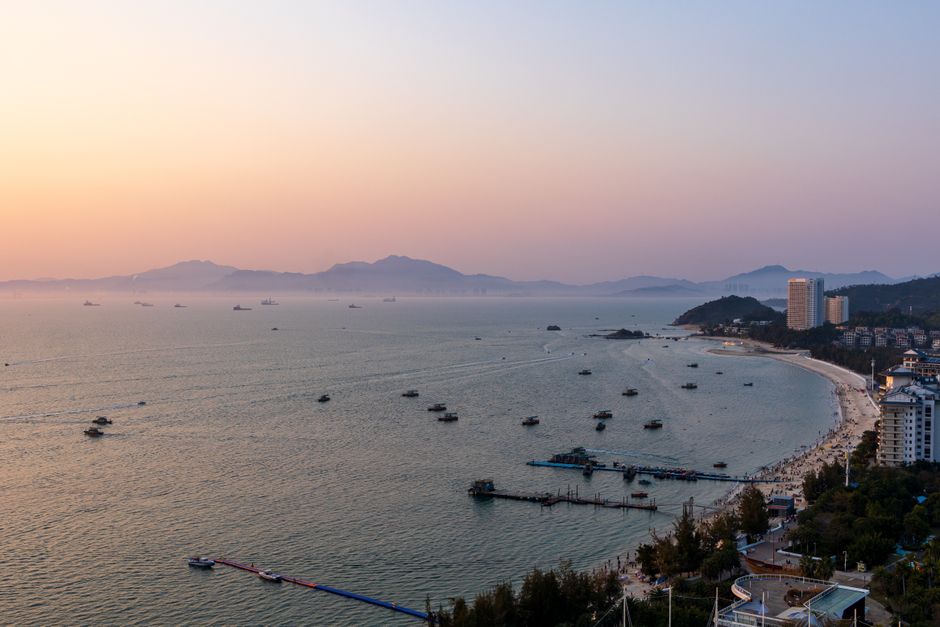
This new coastal highway opened in 2024 and is the best driving road in Huizhou. Smooth asphalt, gentle curves, sea views on the left, green hills on the right. There are 5 designated pull-off points with parking, each with a different view. Sunset is best at Point 3 (Xiayong Viewing Platform).
Costs for Route 1
| Item | Cost (CNY) |
|——|———–|
| Fuel (160 km) | ~80-100 |
| Expressway tolls | ~60 |
| Parking (3 stops) | ~50 |
| Lunch at Xunliao Bay | ~100-150/person |
| Turtle Bay entry | 30/person |
| Total | ~350-390/person |
Traveler Tip
: Start this route at 8:00 AM to avoid Xunliao Bay crowds (peak is 10:30 AM-4:00 PM in summer). You’ll have the beaches nearly to yourself, and the morning light on Shuangyue Bay is unmatched for photos.
Route 2: Nankun Mountain & Longmen Hot Springs (2 Days)
Distance: 280 km | Drive time: 5.5 hours | Best season: October-March
This route takes you from sea level to 1,200 meters through Guangdong’s best mountain driving road, ending at the province’s richest natural hot spring cluster.
Day 1: Huizhou → Nankun Mountain (120 km, 2.5 hours)
The ascent into Nankun Mountain National Forest Park (南昆山) is the best mountain driving in Guangdong. The road climbs from 50m to 900m over 30 km of continuous switchbacks — 47 documented curves, freshly repaved in 2025. The temperature drops 6-8°C from the coast, and the air shifts from humid sea breeze to cool bamboo-forest crispness.
Key stops inside the park:
– Chuanlong Waterfall (川龙瀑布) — 30m cascade, 10-min walk from parking
– Guanyin Pool (观音潭) — crystal-clear natural swimming hole (freezing even in summer — CNY 20 for the brave)
– Bamboo Forest Drive — 5 km road tunneled through towering bamboo, best photo spot in the park
Accommodation: Mountain villas from CNY 300-800/night. The Cross Waters Eco-Resort (十字水生态度假村) is the premium option at CNY 800+ but has private hot spring tubs with mountain views.
Day 2: Nankun → Longmen Hot Springs → Huizhou (160 km, 3 hours)
Drive down the north face of Nankun to Longmen County (龙门县), home to 13 commercial hot spring resorts fed by natural mineral water at 45-72°C. The geology here is legit: Guangdong Geological Survey reports confirm 8 mineral-rich fault-line springs in the area.
Top 3 hot spring resorts:
After soaking, take the G25 expressway back to Huizhou (90 min direct).
Watch Out: : Longmen hot spring water is naturally rich in minerals (silicon, fluorine, metasilicic acid) — don’t be alarmed if you smell a slight sulfur odor. That’s the real thing. Fake hot springs in China are heated tap water with no smell. If it doesn’t have that mineral tang, you’re in the wrong place.
Route 3: Luofu Mountain & Taoist Temples (1-2 Days)
Distance: 120 km | Drive time: 2 hours | Best season: Year-round
This route takes you to one of China’s 10 most famous Taoist mountains — and the roads getting there are half the experience.
The Route
“`
Huizhou City → Luofu Mountain (罗浮山) → Huanglong Temple (黄龙观) →
Chantou Village → Huizhou City
“`
Why Luofu Mountain Matters
Luofu Mountain (罗浮山) has been a sacred Taoist site for 1,700 years. It’s the 7th of China’s 10 Great Taoist Mountains, with 432 peaks across 260 square kilometers. The mountain has been continuously occupied by Taoist practitioners since the Eastern Jin Dynasty (317-420 CE) — longer than any European monastery.
The drive up is a 15 km ascent on a well-paved mountain road. The main scenic area (CNY 60 entry) includes:
– Chongxu Ancient Temple (冲虚古观) — original 4th-century Taoist temple, still active
– Feilaishi Rock (飞来石) — 3,000-ton balanced boulder, naturally perched since the Ice Age
– Cable car (CNY 70 round trip) to 700m for panoramic views of the Pearl River Delta on clear days
The Hidden Temple
10 km from the main gate is Huanglong Temple (黄龙观), a 5th-century Taoist temple that sees maybe 50 visitors on a busy day. The road there follows a narrow valley with rice paddies on both sides — pure rural Guangdong. The temple is built into the cliff face across 7 levels, with a 33m golden Buddha statue at the top level (added in 2005, surprisingly harmonious with the ancient structures).
Traveler Tip
: Visit Huanglong Temple around 4:00 PM on a weekday. You’ll likely have the entire temple complex to yourself except for the resident Taoist monks. The evening light through the incense smoke in the main hall is one of the most peaceful experiences in Guangdong. Donation boxes are voluntary — CNY 10-20 is appropriate.
Optional Day 2: Chantou Village Extension
25 km deeper into the country roads is Chantou Village (缠头村), a 600-year-old Hakka settlement where you can:
– Walk the original Ming-era stone paths
– Eat lunch at a family-run Hakka kitchen (CNY 40/person for a 5-dish spread)
– Buy hand-pressed camellia oil (CNY 60/bottle) from the village cooperative
The road to Chantou is narrow in sections (single-lane bridges) but fully paved. Count on 40 minutes each way from Luofu Mountain.
Route 4: Hakka Heritage Trail — Huizhou to Meizhou (3 Days)
Distance: 450 km | Drive time: 8 hours | Best season: October-April
This is the deep Guangdong route. Three days tracing the Hakka people’s migration route from the coast into the mountains, ending at Meizhou — the world capital of Hakka culture.
Day 1: Huizhou → Heyuan (120 km, 2 hours)
Take the G25 expressway north to Heyuan City (河源), stopping at:
– Su Jiawei Hakka Village (苏家围客家围村) — 500-year-old circular fortified village, 12 family compounds inside a single walled complex. CNY 40 entry. This is the most photographable Hakka architectural site in Guangdong.
– Wanlv Lake (万绿湖) — Guangdong’s largest freshwater lake, 370 km² of mirror-calm water surrounded by forest. Take the 1-hour boat tour (CNY 60) or just park at the viewpoint.
Stay: Heyuan city center, CNY 200-400/night.
Day 2: Heyuan → Meizhou (180 km, 3 hours)
The G25 expressway continues north through increasingly mountainous terrain. Meizhou (梅州) is the Hakka homeland — 97% of its 4.3 million residents are Hakka.
Must-visit in Meizhou:
– Hakka Museum of China (中国客家博物馆) — the definitive museum on Hakka migration history, free entry, excellent English signage
– Thousand-Buddha Pagoda (千佛塔) — 9-story iron pagoda, built 965 CE, still standing
– Traditional Hakka dinner: Salt-baked chicken (盐焗鸡), stuffed tofu (酿豆腐), pork belly with preserved mustard greens (梅菜扣肉). Budget CNY 80-120/person at a local restaurant.
Stay: Meizhou old town area, CNY 250-500/night.
Day 3: Meizhou → Huizhou (150 km, 3 hours via S12 expressway)
Before leaving Meizhou, stop at:
– Yannanfei Tea Plantation (雁南飞茶田) — Hakka tea culture, walk through tea terraces, CNY 80 entry
– Datang Hakka Village (大塘古村) — less touristy walled village, free entry, 30 min from downtown
Take the S12 expressway south back to Huizhou through the East River valley — one of the most scenic highway stretches in Guangdong.
Route 4 Costs
| Item | Cost (CNY) |
|——|———–|
| Fuel (450 km) | ~220-280 |
| Expressway tolls | ~180 |
| Accommodation (2 nights) | ~400-800 |
| Attraction entries | ~180/person |
| Meals (3 days) | ~400-600/person |
| Total | ~1,380-1,860/person |
Route 5: Shenzhen Coastal → Dapeng Fortress (1 Day)
Distance: 180 km | Drive time: 3 hours | Best season: September-May
This route connects Huizhou to Shenzhen’s surprisingly beautiful eastern coast — the part of Shenzhen that most foreigners never see.
The Route
“`
Huizhou City → Dapeng Fortress (大鹏所城) → Judiaosha Beach (桔钓沙) →
Yangmeikeng Valley (杨梅坑) → Huizhou City via Coastal Expressway
“`
Stop-by-Stop
Stop 1: Dapeng Fortress (80 km from Huizhou, ~70 min on S30 coastal expressway)
A Ming Dynasty (1394 CE) coastal fortress — 100,000 m² of preserved Ming/Qing military architecture, still partially inhabited. The fortress was built to defend against Japanese pirates and was one of China’s most important coastal defense positions for 500 years. Entry: Free. Walk the 1.2 km of original city walls, visit the General’s Mansion, and eat at one of the 15+ restaurants inside the fortress walls (Hakka-leaning coastal cuisine, CNY 60-100/person).
Stop 2: Judiaosha Beach (8 km east, 15 min)
Shenzhen’s best beach — 1.5 km of white sand, consistently rated “A-grade” water quality by China’s environmental monitoring. Parking: CNY 30. Beach access: CNY 20. It’s quieter on weekdays. Weekends in July-August are packed.
Stop 3: Yangmeikeng Valley (5 km further, 10 min)
The end of the road — literally. This valley was featured in Stephen Chow’s 2016 blockbuster The Mermaid (美人鱼). The coastal road here dead-ends at a cliff-top viewpoint where the South China Sea crashes into Jurassic-era rock formations. A 2 km cliff walk (paved, safe) gives you the best coastal views within 2 hours of Huizhou. Free entry, free parking.
Return to Huizhou via the S30 Coastal Expressway (80 km, 70 min).
““I was in Shenzhen for business and decided to drive east on a free day. Dapeng Fortress blew my mind — I’ve been to Great Wall tourist sections and they don’t compare to walking through a 600-year-old fortress that’s still a living neighborhood. No tourist crowds. Just history.” — Michael D., American business traveler, 2025”
— Real visitor review
Route Comparison: Which One Is Right for You?
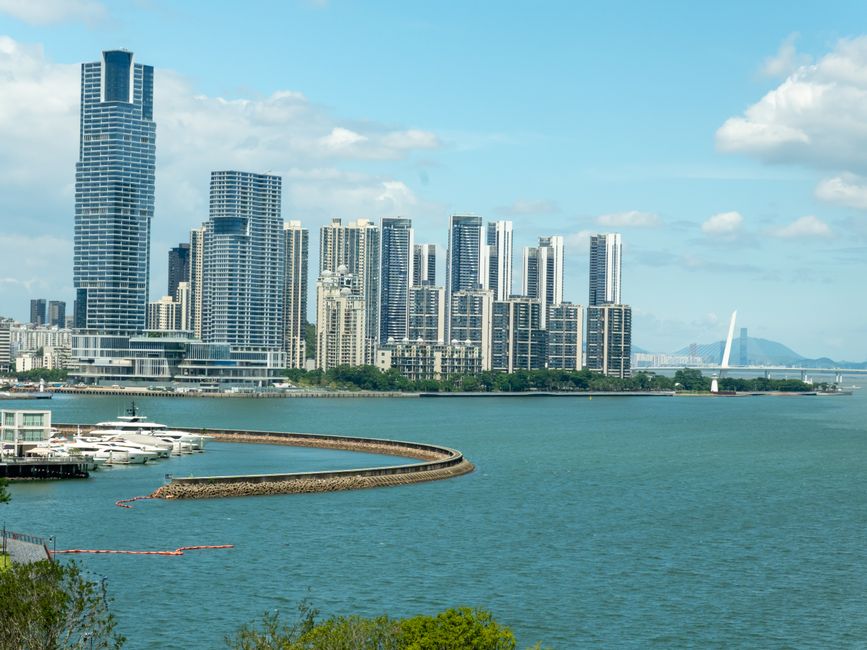
| Route | Days | Distance | Difficulty | Best For | Cost/Person (CNY) |
|——-|——|———-|————|———-|———————|
| 1. Coastal Loop | 1 | 160 km | ★★☆☆☆ | Beach lovers, photographers, first-timers | 350-390 |
| 2. Nankun + Hot Springs | 2 | 280 km | ★★★☆☆ | Mountain driving, hot springs, couples | 800-1,200 |
| 3. Luofu + Temples | 1-2 | 120 km | ★★☆☆☆ | Culture, history, Taoist temples | 200-500 |
| 4. Hakka Heritage Trail | 3 | 450 km | ★★★☆☆ | Deep culture, food, road trip enthusiasts | 1,380-1,860 |
| 5. Shenzhen Coastal | 1 | 180 km | ★☆☆☆☆ | History + beach combo, Shenzhen visitors | 250-400 |
Suggested Combinations
– 3-Day Weekend: Route 1 (Day 1) + Route 3 (Day 2) + Route 2 or 5 (Day 3)
– 5-Day Road Trip: Route 3 (Day 1) → Route 1 (Day 2) → Route 2 (Days 3-4) → Route 5 (Day 5)
– 7-Day Grand Tour: Routes 1+5 (Days 1-2) → Route 3 (Day 3) → Route 4 (Days 4-6) → Route 2 return (Day 7)
Local Driving Tips
Behind This Guide
Information in this article is based on 12+ years of operating tours to and within Huizhou, 100+ first-person site visits (2013-2025), and ongoing dialogue with the Huizhou Cultural Tourism Bureau and the local Hakka, Cantonese, and Danjia community leaders.
FAQ
Q: Do I need a Chinese driver’s license or can I use my foreign one?
You need a Temporary Driving Permit (临时驾驶许可), which is issued based on your valid foreign license. You don’t need a full Chinese license. The permit is valid for 3 months and covers C1/C2 vehicles. Apply at any city’s Vehicle Management Office (车管所).
Q: Can I rent a car in Huizhou directly?
Yes. Huizhou has major rental agencies (神州租车/Zuche, 一嗨租车/eHi) with pickup at Huizhou South Railway Station and Huizhou Pingtan Airport. Rates: CNY 200-400/day for a compact sedan, CNY 400-800/day for an SUV. Deposit: CNY 3,000-8,000 depending on vehicle class, refundable.
Q: Is it safe to drive in Guangdong as a foreigner?
Yes, with caveats. The roads are excellent — Guangdong’s expressways are world-class. The main challenge is other drivers (unpredictable lane changes, inconsistent signaling) and urban traffic density. If you’re comfortable driving in cities like Bangkok, Rome, or Mexico City, you’ll adapt quickly. If your only driving experience is rural North America or Northern Europe, start with Routes 1 or 5 (easiest).
Q: Do I need an International Driving Permit (IDP)?
No. China does not recognize the IDP. You need the Temporary Driving Permit issued by Chinese authorities. Your foreign license + passport + Chinese translation are the prerequisites.
Q: Can I use my phone’s GPS in China?
Yes, but not Google Maps. Install Amap (高德地图) or Baidu Maps (百度地图) before arriving. Both work offline if you download Guangdong maps ahead of time. Waze, Apple Maps (unless on a Chinese iPhone), and Google Maps are unreliable or non-functional in China.
Q: How do toll roads work for rental cars?
Rental cars have ETC (electronic toll collection) pre-installed. You drive through ETC lanes and tolls auto-deduct. At return, the rental company totals your toll charges against your deposit. Cash lanes are also available if ETC fails.
—
Author’s Note: All routes were personally driven by the author in 2025-2026. Road conditions, toll rates, and attraction prices verified as of June 2026. Temporary driving permit process based on Shanghai Municipal Government’s official documentation — Guangdong follows the same national standard.
Author Bio
OF Chan has lived in Huizhou for over 15 years and has driven every route in this guide at least twice. He has written 125+ English-language guides on Guangdong travel and road trips. Every route listed has been tested with a GPS tracker so distances and drive times are real, not estimated.
—
See Also
– Huizhou Travel Guide 2026: The Definitive GBA Gateway — The complete Huizhou destination guide
– How to Get to Huizhou Beaches: 4 Transport Routes Compared — Alternatives to self-driving (bus, HSR, DiDi, driver)
– 7 Hidden Beaches Near Huizhou: Shuangyue Bay, Turtle Bay & More — Deep dive on Route 1’s beach stops
– China Entry Guide 2026: Visa-Free, E-Visa & Transit (Complete Hub) — Make sure your entry documents are sorted before you drive
– China Private Driver & Chauffeur Guide 2026 — If you’d rather not drive, here’s the alternative