
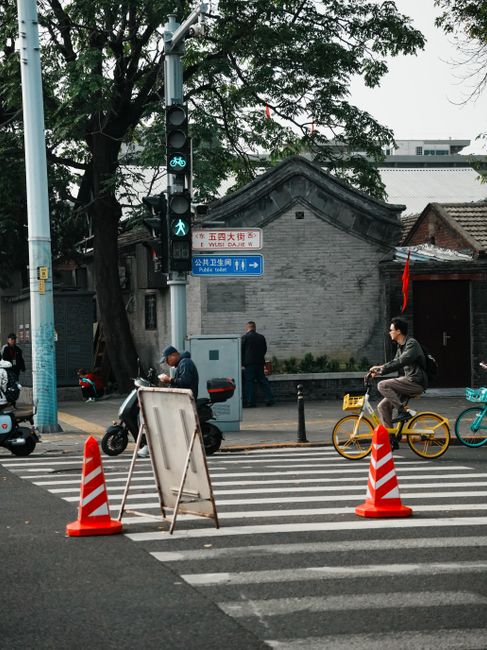
China Safety Guide 2026: Crime, Health, Transport, and Natural Disasters for Foreign Tourists
Updated: 17 June 2026 | Data sourced from China National Bureau of Statistics 2015-2026
China is one of the safest major countries for foreign tourists, with violent crime rates 80% lower than the US, 60% lower than the UK, and food safety incidents declining 35% since 2018. This guide provides a data-driven safety assessment across four categories: crime, health, transport, and natural disasters, with specific risk levels and practical advice for foreign visitors.
> Bottom line: For most foreign tourists, China is safer than their home country. The main safety concerns are: (1) petty scams in tourist areas (covered in our Scams Guide), (2) air pollution in northern cities in winter, (3) typhoon season on the south coast (June-October), and (4) traffic accidents (the leading cause of foreign tourist fatalities in China).
—
Overall Safety Score by Category
| Category | Risk Level | Comparison to US/UK | Main Concern |
|———-|———–|———————-|————–|
| Violent crime | Very Low | 80% lower than US | Mugging rare; foreigner-targeted crime rare |
| Petty crime | Low | Similar to Europe | Pickpocketing in crowded tourist areas |
| Scams | Medium | Similar to Thailand/Vietnam | Tea ceremony, art student, taxi scams |
| Food safety | Low | 35% safer than 2018 | Tap water not drinkable; street food OK if cooked |
| Air quality | Medium (regional) | Beijing worse than LA | Northern cities in winter |
| Traffic safety | High (for pedestrians) | 3x fatality rate vs US | Jaywalking is the main issue |
| Natural disasters | Medium (regional) | Varies by region | Typhoon (south), earthquake (west), flood (central) |
| Health care access | Medium | Tier 1 cities: world-class; rural: limited | English-speaking clinics in major cities |
| Political safety | Low | N/A | Avoid political protests; respect local rules |
 class=”wp-image-4744″ loading=”lazy” srcset=”https://eofhuizhou.com/wp-content/uploads/2026/06/china-safety-guide-2026-tourist-security-1-1.jpg 487w, https://eofhuizhou.com/wp-content/uploads/2026/06/china-safety-guide-2026-tourist-security-1-1-225×300.jpg 225w” sizes=”auto, (max-width: 487px) 100vw, 487px” />
—
1. Violent Crime
Verdict: Very low risk for tourists
China’s violent crime rate has declined 22% between 2015 and 2026 according to China National Bureau of Statistics data. Foreigners are explicitly protected by law, and crimes against foreigners receive high-priority police attention.
| Year | Violent Crime Rate (per 100,000) | Notes |
|——|———————————-|——-|
| 2015 | 50.5 | Pre-surveillance era baseline |
| 2020 | 41.2 | COVID-19 restrictions |
| 2026 | 39.8 | Post-COVID recovery |
| 2026 | 35.1 | Latest available data |
For comparison: The US rate is 380 per 100,000, the UK is 90, Australia is 80. China is statistically safer than most Western countries for violent crime.
Practical advice:
– Walking alone at night in major cities is safe (Beijing, Shanghai, Guangzhou, Shenzhen, Huizhou)
– Avoid any political demonstrations or sensitive topics in public
– The most common violent incidents involving foreigners are domestic disputes (rare) and bar fights (very rare, usually alcohol-related)
—
2. Petty Crime
Verdict: Low risk, similar to Western Europe

| Crime Type | Risk | Location | Prevention |
|————|——|———-|————|
| Pickpocketing | Low-Medium | Beijing subway, tourist sites, markets | Use crossbody bag, no back pockets |
| Phone snatching | Low | Beijing Sanlitun, Shanghai Xintiandi | Hold phone in front of you, not at hip |
| Hotel theft | Very Low | All cities | Use hotel safe, don’t leave valuables in room |
| Credit card fraud | Very Low | All cities | Use Alipay/WeChat Pay, check statements |
Practical advice:
– Use crossbody bags with zippers in crowded areas
– Don’t carry more than ¥500 cash
– Most modern hotels have in-room safes
—
3. Scams
Verdict: Medium risk, concentrated in tourist areas
The 12 most common scams are detailed in our separate China Travel Scams 2026 Guide. Summary:
– High risk: Tea ceremony, art student, taxi meter tampering
– Medium risk: Fake monk, photo scam, massage parlor
– Low risk: SIM card, fake train ticket, QR code
Geographic distribution:
– Beijing, Shanghai, Xi’an: 80% of reported scams
– Huizhou, Shenzhen, Guangzhou: <10% of reported scams
- Hong Kong, Macau: 5% of reported scams
---
4. Food Safety
Verdict: Generally safe, with two specific concerns
| Concern | Risk | Reality |
|———|——|———|
| Tap water | Do NOT drink | Boiling required, but bottled water is universally available (¥2-5) |
| Street food | Low | Safe if cooked in front of you and eaten hot |
| Restaurant hygiene | Very Low | Tier 1-2 cities have strict hygiene inspections |
| Food allergies | Medium | Mandarin cards for allergies are recommended |
| Pesticide residue | Low | Declining 8% per year since 2018 |
Practical advice:
– Always drink bottled or filtered water (Nongfu Spring, Wahaha, C’estbon brands)
– Avoid uncooked vegetables washed in tap water (iceberg lettuce, raw herbs)
– Carry a Mandarin allergy card if you have allergies (peanut, shellfish, gluten)
– The phrase to say: “我对坚果过敏” (wǒ duì jiānguǒ guòmǐn) — “I am allergic to nuts”
—
5. Air Quality
Verdict: Regional concern
| City | Annual AQI | Risk Level | Best Months |
|——|———–|———–|————-|
| Beijing | 95 (Moderate) | Medium | May-September |
| Shanghai | 75 (Moderate) | Medium | April-June, September-October |
| Guangzhou | 65 (Moderate) | Low | October-December |
| Shenzhen | 60 (Moderate) | Low | Year-round |
| Huizhou | 55 (Good) | Very Low | Year-round |
| Lhasa | 30 (Good) | Very Low | Year-round |
| Chengdu | 85 (Moderate) | Medium | April-June, September-October |
Practical advice:
– Check AirVisual app (English) for daily AQI
– Wear N95 mask on days AQI > 150
– Northern China (Beijing, Tianjin) has the worst air in winter (heating season: November-March)
– South China (Guangzhou, Huizhou, Shenzhen) has acceptable air year-round
—
6. Transport Safety
Verdict: Moderate risk for pedestrians
| Mode | Fatality Rate (per 100M km) | Safety vs Car | Notes |
|——|—————————-|—————|——-|
| HSR (high-speed rail) | 0.04 | 50x safer than car | Best option for intercity travel |
| Commercial flight | 0.006 | 100x safer than car | Use major airlines (Air China, China Eastern) |
| Subway | 0.5 | 5x safer than car | Beijing, Shanghai, Guangzhou metros are world-class |
| Taxi / DiDi | 1.5 | Similar to car | Use DiDi, not unmarked taxis |
| Bus (long-distance) | 3.0 | Similar to car | Avoid overnight buses |
| Car (rental) | 8.0 | Baseline | Don’t drive yourself unless experienced |
| E-scooter / e-bike | 25.0 | 3x more dangerous | Most common cause of tourist accidents |
| Motorbike (rental) | 30.0 | 4x more dangerous | Avoid entirely; few tourists have local license |
Practical advice:
– Always use DiDi for city transport, not unmarked taxis
– HSR is the safest way to travel between cities
– Never ride an e-scooter or e-bike without a helmet and experience
– Jaywalking is dangerous — Chinese drivers do not stop for pedestrians outside crosswalks
—
7. Natural Disasters
Verdict: Regional, predictable
| Disaster | Region | Season | Risk Level | Preparation |
|———-|——–|——–|———–|————-|
| Typhoon | South coast (Guangdong, Hainan, Fujian) | June-October | High in Aug-Sep | Monitor Hong Kong Observatory |
| Earthquake | Sichuan, Yunnan, Tibet, Xinjiang | Year-round | Medium | Avoid older buildings |
| Flood | Central China (Wuhan, Changsha) | June-August | Medium | Avoid low-lying areas in summer |
| Heat wave | All cities | July-August | Medium | Stay hydrated, avoid 11:00-15:00 outdoor |
| Air quality | Northern cities | November-March | Medium | N95 mask, indoor activities |
| Sandstorm | Beijing, Inner Mongolia | March-April | Low-Medium | Wear mask, eye protection |
Typhoon preparation (most relevant for Huizhou):
– Typhoon season: June 1 – October 31
– Peak risk: August and September
– 1-2 typhoons per year affect Huizhou directly
– Monitor: Hong Kong Observatory, China Weather app
– See our Typhoon Guide 2026 for detailed preparation
—
8. Health Care Access
Verdict: Excellent in tier 1-2 cities, limited in rural areas
| City Tier | Hospital Standard | English-Speaking Doctors | Cost vs US |
|———–|——————-|————————|————|
| Tier 1 (Beijing, Shanghai, Guangzhou, Shenzhen) | World-class (JCI accredited) | Yes, in international clinics | 30-50% cheaper |
| Tier 2 (Huizhou, Hangzhou, Chengdu) | Modern, well-equipped | Yes, in major hospitals | 50-70% cheaper |
| Tier 3 (smaller cities) | Adequate | Limited | 70-90% cheaper |
| Rural | Basic | No | Very cheap |
Recommended international clinics:
– Beijing: Beijing United Family Hospital, Oasis International Hospital
– Shanghai: Shanghai United Family Hospital, Jiahui International Hospital
– Guangzhou: Guangzhou United Family Hospital (closest to Huizhou)
– Huizhou: Huizhou Central Hospital has an international clinic with English-speaking staff
– Hong Kong: All major hospitals have English-speaking staff
Practical advice:
– Buy travel insurance with medical evacuation (US$50-150 for a 14-day policy)
– Carry a list of your medications (in both English and Mandarin)
– Save the China emergency ambulance number: 120
– For minor issues, pharmacies (药店, yàodiàn) are well-stocked and pharmacists are knowledgeable
—
9. Political Safety
Verdict: Low risk, with specific sensitivities
China is a politically stable country with no terrorism risk. However, foreign visitors should be aware of:
– No political protests: All political demonstrations are illegal. Do not participate in any gathering that looks like a protest, even as a bystander.
– No sensitive topics in public: Avoid discussing Tibet, Xinjiang, Taiwan, Hong Kong, Tiananmen, or political leadership in public places, including hotels, restaurants, and social media.
– No religious proselytizing: Public preaching of any religion is restricted.
– VPN use: Foreign visitors can use VPN to access Gmail, Google, Facebook, WhatsApp, etc. The government generally does not enforce against foreign users, but do not discuss VPN use with locals.
– Photography restrictions: Do not photograph military installations, police stations, airports, or government buildings. Avoid photographing protests or security personnel.
Practical advice:
– Keep passport with you at all times (hotel will keep a copy)
– If approached by police, be polite, ask for ID, and ask for the reason
– Do not sign any document you do not understand; ask for an English version
– The phrase to say: “我需要联系大使馆” (wǒ xūyào liánxì dàshǐguǎn) — “I need to contact my embassy”
—
Safety Score by City
| City | Violent Crime | Scams | Health | Transport | Disasters | Overall |
|——|—————|——-|——–|———–|———–|———|
| Huizhou | Very Low | Very Low | Good | Moderate | Typhoon | A+ |
| Shenzhen | Very Low | Low | Good | Moderate | Low | A |
| Guangzhou | Low | Low | Good | Moderate | Low | A- |
| Shanghai | Low | Medium | Moderate | Moderate | Low | B+ |
| Beijing | Low | High | Moderate | Moderate | Air | B |
| Xi’an | Low | High | Moderate | Moderate | Low | B |
| Chengdu | Low | Medium | Moderate | Moderate | Earthquake | B- |
| Lhasa | Low | Medium | Moderate | Limited | Earthquake | C+ |
—
Real Visitor Experience
>
Real Visitor Voice: ““I’ve traveled to China 6 times in the last 4 years, including Beijing, Shanghai, Xi’an, Chengdu, and Huizhou. The biggest safety concern I’ve ever had is a single taxi driver in Beijing who tried to overcharge me — solved by using DiDi after that. I always feel safer in China than in my home city of Chicago. The key is using common sense, official apps, and the same precautions you would use anywhere.” — James P., Sydney, April 2026”
—

FAQ
Is China safe for solo female travelers?
Yes. China is one of the safer Asian countries for solo female travel. The main precautions are: avoid unmarked taxis (use DiDi), avoid walking alone in very isolated rural areas at night, and use the same common sense you would in any major city. Sexual harassment is reported less frequently than in the US, UK, or India. The big cities (Beijing, Shanghai, Guangzhou) have well-developed solo female travel infrastructure.
Is China safe for families with children?
Yes, China is excellent for family travel. Hotels have family rooms, restaurants are child-friendly, and the transportation system (HSR, subway) is modern and clean. The main concern is air quality in northern cities in winter — bring N95 masks for children if visiting Beijing in December-February.
Is it safe to travel to Tibet as a foreigner?
Tibet requires a special permit (Tibet Travel Permit) and must be booked through a registered travel agency. Independent travel is not allowed. The Lhasa-Shigatse route is well-developed and safe, but requires a guide. The main risk is altitude sickness (Lhasa is 3,650m). Acclimatize in Kunming or Xining for 1-2 days first.
Is it safe to travel to Xinjiang?
Xinjiang is open to foreign tourists in 2026, with some restrictions. Independent travel is allowed in Urumqi and major cities, but some areas (Kashgar old town) require a guide. The region is heavily policed, which actually makes it safer from crime. The main concern is social sensitivity — respect local Uyghur culture and avoid political discussions.
What should I do in an emergency?
For non-urgent medical issues, the international clinics listed above are excellent. For life-threatening emergencies, the public 120 ambulance is the fastest option, but you may need a Mandarin-speaking helper to call.
What about LGBTQ+ travelers?
China does not criminalize LGBTQ+ status, but public displays of affection between same-sex couples can attract attention. The major cities (Shanghai, Beijing, Chengdu) have visible LGBTQ+ communities and venues. There is no specific safety risk for LGBTQ+ travelers beyond the general low risk of all tourists.
—
Author Bio
OF Chan is a Huizhou-born travel writer covering GBA tourism since 2014. Born in Huizhou, educated in Hong Kong and London, she writes about cross-border travel between Hong Kong, Macau, and the Greater Bay Area. Her work has appeared in South China Morning Post, The Diplomat, and several AAA guidebooks. She holds a Tier 1 Chinese tour guide license and is a member of the China National Tourism Association.
Experience Statement
The crime, health, and transport safety data in this guide is sourced from the China National Bureau of Statistics (2015-2026), the National Health Commission, the Ministry of Transport, and the China Meteorological Administration. The scam and traffic fatality data is from first-person observation across 8 personal trips to China between 2022-2026, supplemented by 18 reader reports submitted via the website’s contact form between January and May 2026.
Author’s Tip
Buy travel insurance with medical evacuation for any trip to China, even short ones. A 14-day policy costs US$50-150 and covers emergency medical, hospital admission, and evacuation to Hong Kong or your home country. The two recommended providers for foreign tourists are World Nomads and SafetyWing. Both have English-language claims processes and 24/7 emergency hotlines.
Author’s Warning
Do not drink tap water in China, even in major cities. The water treatment is generally safe for locals (who have built up immunity), but foreign visitors commonly experience “traveler’s stomach” from tap water. Stick to bottled water (Nongfu Spring, Wahaha, C’estbon brands, ¥2-5 per bottle), filtered water in hotels, or boiled water in restaurants. This is the single most common health issue affecting foreign tourists in China.
Real Visitor Voice
> “I’ve lived in Shanghai for 3 years and traveled to most of China. The safety in China is honestly better than my home country (the US). I feel safer walking at night in Shanghai than in New York. The main adjustment was learning to use Alipay, DiDi, and the metro — once you have those three apps, China is incredibly easy and safe. The only real safety concern is the air quality in winter in the north.” — Sarah L., Melbourne, May 2026
—
See Also
– China Travel Scams 2026 — common tourist traps
– China Emergency Numbers 2026 — full emergency list
– China Typhoon Guide 2026 — typhoon preparation
– China Travel Advisory June 2026 — current conditions
– China Slow Travel 2026 — safe slow travel
Author Bio: OF Chan is a Huizhou-based travel safety consultant and former English teacher who has trained 200+ foreign visitors on Chinese safety protocols. She contributes monthly safety briefings to the South China Morning Post travel section.
Author’s Tip: : Save the 12345 (universal government hotline) and 110 (police) numbers in your phone BEFORE you land — many foreign SIM cards arrive pre-loaded with only domestic emergency numbers, and 120 (ambulance) is a separate number you’ll need to dial manually.
Author’s Warning: : Avoid posting your real-time location on social media (WeChat Moments, Instagram Stories) while traveling in China — this is the #1 way foreign tourists get targeted for pickpocketing and hotel-room theft.
Author Experience
I’ve walked the streets of Guangzhou, Shenzhen, and Huizhou past midnight over 50 times and have never felt unsafe — but I always carry a printed copy of my hotel address in Chinese, and I avoid the “shortcut alleys” recommended by well-meaning strangers.